G. CHANDRASHEKHAR, Advisor, ERTF
Teaser: Gold and silver ended both the day and week lower as volatility across the precious metals complex eased at the start of the third quarter. Despite the recent consolidation, the broader outlook for gold remains constructive, with slowing economic growth, potential monetary policy easing, renewed geopolitical tensions and bargain buying expected to support another leg higher later this year. Meanwhile, the latest escalation in the U.S.-Iran conflict has increased uncertainty over global oil supplies, challenging expectations of a sizeable supply surplus next year. Firm crude oil prices could also sustain inflationary pressures, potentially delaying the pace of interest rate cuts by major central banks. Higher energy costs may keep inflation expectations elevated, limiting policymakers' flexibility and supporting demand for safe-haven assets if macroeconomic risks intensify. However, resilient economic data and persistently high interest rates may continue to cap upside in the near term.
Introduction:
Gold and silver weakened during the week as renewed US-Iran tensions lifted crude prices, reviving inflation concerns and reinforcing expectations that the Federal Reserve may keep interest rates elevated for longer. Higher Treasury yields and a firmer dollar reduced demand for non-yielding assets despite intermittent safe-haven buying. Markets also monitored mixed signals from Fed officials alongside uncertainty surrounding the fragile Middle East ceasefire, limiting stronger upside momentum across bullion. Going into the coming week, precious metals are expected to remain driven by geopolitical developments, US inflation data and Fed communication, with volatility likely to remain elevated across global markets.
WTI crude futures posted weekly gains as renewed military exchanges between the US and Iran revived concerns over potential supply disruptions across the Middle East. Fresh US strikes on Iranian infrastructure, retaliatory attacks on US-linked assets, and continued uncertainty surrounding the Strait of Hormuz restored part of the geopolitical risk premium that had faded in previous weeks. Although fears of weaker global demand and higher inflation limited stronger gains, supply risks remained the dominant driver of price action. Traders also monitored OPEC+ production trends and regional shipping activity as the market balanced tighter supply risks against broader macroeconomic uncertainty. Going forward, crude is expected to remain highly headline-driven, with developments surrounding Hormuz, US-Iran relations, and upcoming US inflation data likely to determine whether prices extend higher or retrace recent gains.
Gold
Gold slipped below $4,100 an ounce on Monday, remaining under pressure as renewed missile strikes between the US and Iran drove oil prices higher, fuelling expectations of interest-rate hikes to curb inflation. The US carried out its fourth strike in a week against Iran on Sunday in retaliation for an Iranian attack on a Cyprus-flagged container ship. Tehran declared that the Strait of Hormuz would be closed "until further notice," though the claim was dismissed by the US Central Command. Investors are also awaiting key US inflation data due this week for further clues on the Federal Reserve's policy outlook. Markets currently expect the Fed to deliver one more interest-rate hike before the end of the year. Meanwhile, Fed Chair Kevin Warsh is scheduled to make his first appearance before the US Congress on Tuesday.
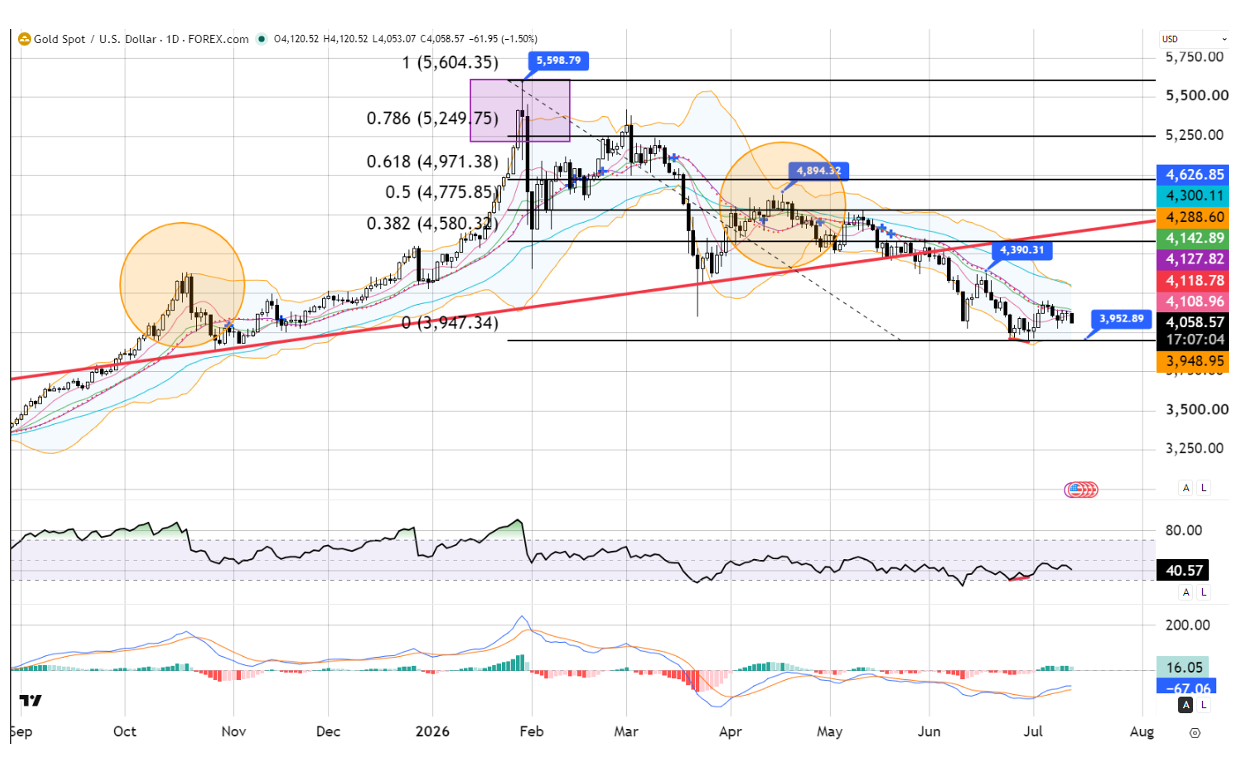
Technical View: $4058.57. A persistent daily structure of lower highs and lower lows sets the near-term objective toward 4020/4000, with an extended target down at 3950. Immediate technical resistances are well defined at 4200/4227, capping the broader structure below the 4235/4265 weekly boundary. The critical risk point sits at 4230, above which a sustained push invalidates this bearish narrative and exposes 4265 and the trend-altering resistance at 4310.
Silver
Silver dropped below $59 an ounce on Monday, extending losses from last week as renewed missile strikes between the US and Iran drove oil prices higher, fuelling expectations of interest-rate hikes to curb inflation. The US carried out its fourth strike in a week against Iran on Sunday in retaliation for an Iranian attack on a Cyprus-flagged container ship. Tehran declared that the Strait of Hormuz would be closed "until further notice," though the claim was dismissed by the US Central Command. Investors are also awaiting key US inflation data due this week for further clues on the Federal Reserve's policy outlook. Markets currently expect the Fed to deliver one more interest-rate hike before the end of the year. Meanwhile, Fed Chair Kevin Warsh is scheduled to make his first appearance before the US Congress on Tuesday.
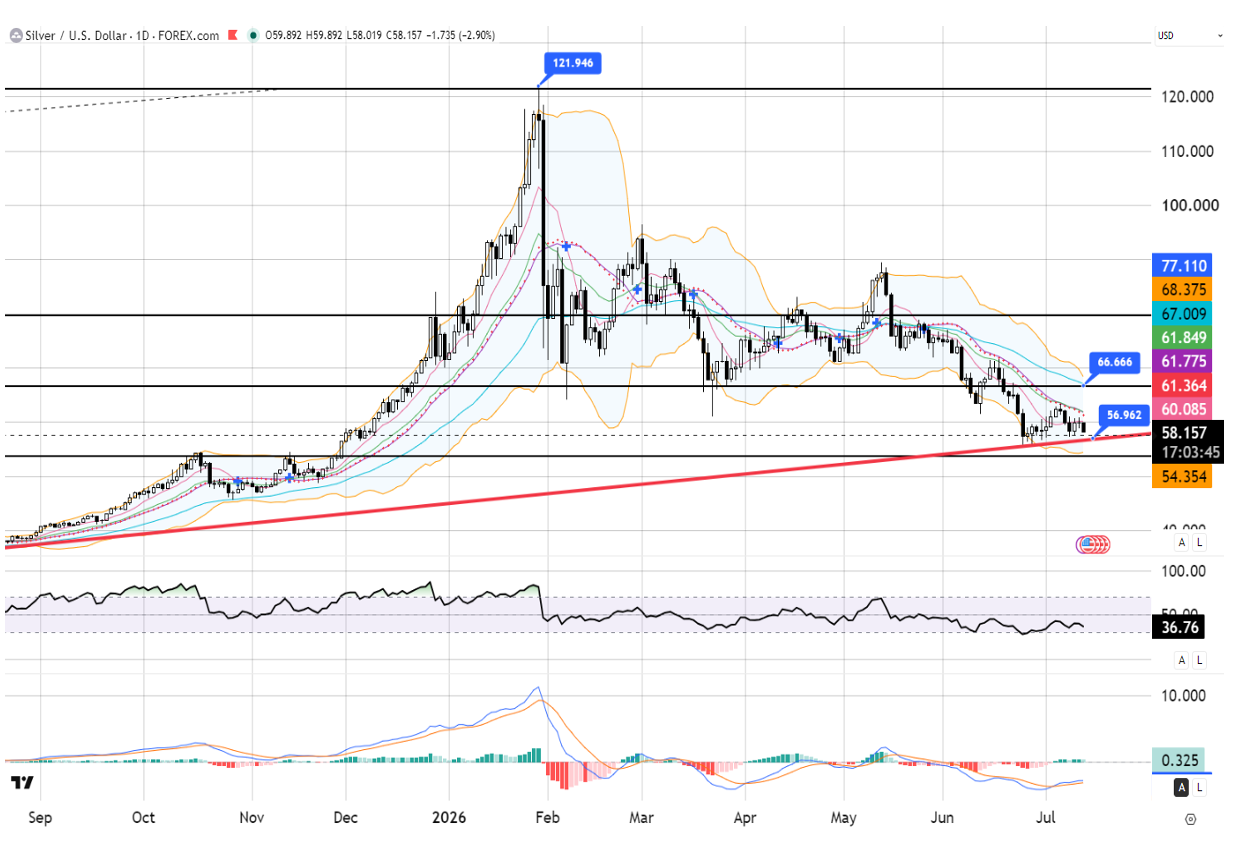
Technical View: $58.15. The support zone at $53–54 remains crucial, with prices holding above it likely to trigger a recovery towards $67–68. An unexpected fall below $55 could dash our bullish hopes.
Crude Oil
Crude oil climbed more than 3% to above $73 per barrel on Monday, snapping a two day losing streak after the US and Iran exchanged fresh missile strikes over the weekend amid ongoing tensions over shipping through the Strait of Hormuz. The US carried out its fourth strike in a week against Iran on Sunday in retaliation for an Iranian attack on a Cyprus-flagged container ship. Tehran declared that the Strait of Hormuz would be closed "until further notice," although the claim was rejected by the US Central Command. Oil prices have rebounded since last week as the renewed hostilities reversed part of the losses triggered by the interim US-Iran peace agreement, which had fuelled expectations of increased Middle East energy supplies. The latest escalation has weakened hopes for renewed diplomacy, with Tehran insisting that Washington must first fulfil its previous commitments on Hormuz transit and the normalization of Iranian oil exports before negotiations can resume.
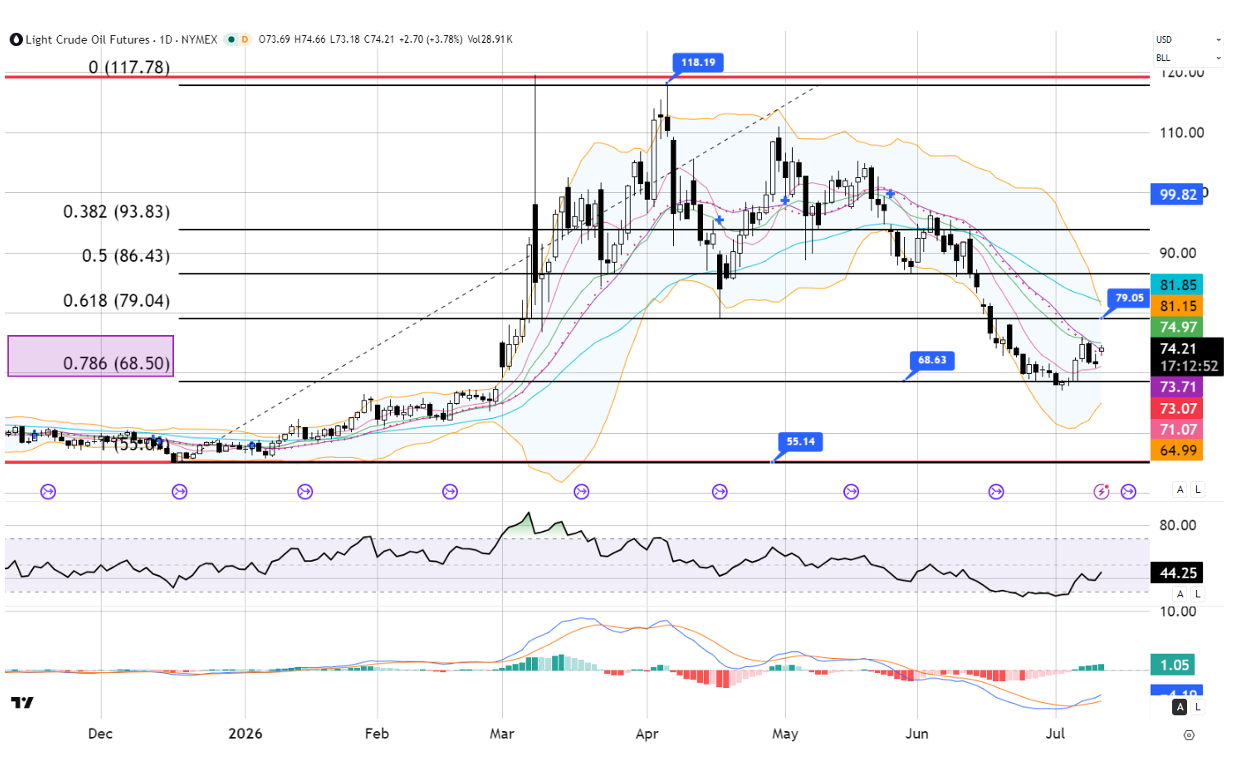
Technical View: $74.21. A pivotal weekly upturn on the chart establishes the near-term objective of a recovery toward 77.70. Daily resistance at 76.05-77.15 is expected to cap this bounce before the next structural wave-5 decline targets 67.92/59.50. The critical risk point sits at the 50-day EMA of 79.15, above which a clear breach invalidates this broader downside projection.
Copper
Copper futures climbed to around $6.26 per pound on Friday, reversing losses from earlier this week as investor appetite for risk assets improved, led by a rebound in semiconductor and artificial intelligence-related stocks. Market participants also looked past the renewed fighting in the Middle East after reports indicated that the US and Iran will continue peace negotiations aimed at securing a lasting resolution to the conflict. Meanwhile, oil prices retreated from recent highs, helping ease inflation concerns and reduce fears of aggressive interest rate hikes, which improved the outlook for manufacturing activity. Even so, markets continue to expect the Federal Reserve to raise interest rates at least once this year. Copper, often viewed as a barometer of global economic growth, remained sensitive to shifts in the economic and monetary policy outlook.
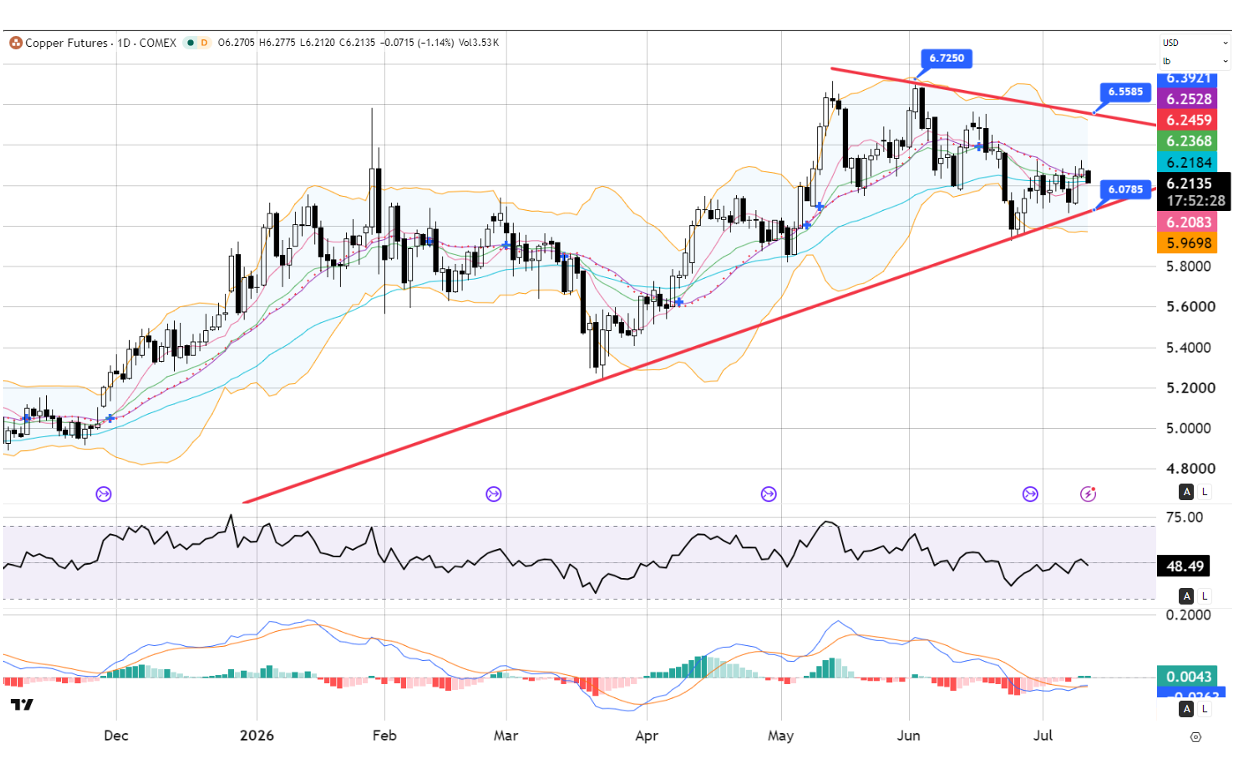
Technical View: $6.21. Charts indicate a mildly bullish objective targeting $6.40 near term. A decisive cross above 6.30/35 resistance zone could likely confirm the up move. Supports at 6.05/07 where dips could hold for a rise. Only an unexpected fall below 6.00 could dash our bullish hopes.