Teaser: Gold rose to $4,195 per ounce on Friday, its highest level since June 23 and on track for a 2% weekly gain after four weeks of declines, as dismal US jobs data lowered prospects of a near-term Federal Reserve interest rate hike. US nonfarm payrolls rose by only 57,000 in June, the smallest increase in four months and much below the 110,000 predicted, forcing traders to reduce their bets on a September rate hike. According to the CME FedWatch tool, the chance of a raise has reduced to 50%, down from 66% prior to the announcement. Lower interest rates reduce the opportunity cost of owning non-yielding assets, such as gold. Furthermore, the US dollar was on course for its biggest weekly drop since April, bolstering gold prices. Central banks also boosted demand, adding a net 41 metric tonnes of gold to reserves in May, according to World Gold Council data.
Introduction:
Gold and silver extended their recovery through the week as softer US labour market data and easing expectations of near-term Federal Reserve tightening improved sentiment across the precious metals complex. A weaker dollar and declining Treasury yields supported bullion after markets scaled back rate hike expectations, while safe-haven demand resurfaced following renewed uncertainty surrounding US Iran peace negotiations. Although higher interest rates remain a medium-term headwind for non-yielding assets, investors increasingly focused on signs of moderating inflation and a less aggressive policy outlook. In the coming week, precious metals are expected to remain driven by US macroeconomic releases, Fed communication, and geopolitical developments, with weaker economic data likely to support further gains while any hawkish surprises could cap the recovery.
WTI crude futures remained under pressure as improving supply expectations continued to outweigh lingering geopolitical concerns. Progress in US-Iran peace efforts, the gradual normalization of shipping through the Strait of Hormuz, and higher output from Gulf producers kept the geopolitical risk premium subdued despite intermittent military tensions. The market also faced pressure from softer Chinese demand expectations and growing signs of near-term oversupply as OPEC+ production increased. While prices stabilized toward the end of the week, sentiment remained cautious as traders balanced ongoing diplomatic efforts against the possibility of renewed disruptions in the Middle East. Going forward, crude is expected to remain highly headline-driven, with sustained diplomatic progress likely to keep prices subdued, while any deterioration in negotiations or fresh supply threats could quickly restore volatility and risk premiums.
Gold
Gold traded near $4,200 an ounce on Monday, holding onto last week’s gains as weaker-than-expected US jobs data and lower oil prices led traders to scale back expectations for Federal Reserve interest rate hikes. Oil prices edged lower as recovering energy flows through the Strait of Hormuz and the prospect of increased OPEC+ supply fueled concerns about a potential glut. That has helped ease inflationary pressures that had previously heightened fears of further rate hikes and weighed on non-yielding gold. Meanwhile, data released last week showed US nonfarm payrolls increased by just 57,000 in June, the smallest gain in four months and well below forecasts of 110,000, prompting traders to reduce their bets on a September rate hike. According to the CME FedWatch tool, the probability of a hike fell to 50%, down from 66% before the report.
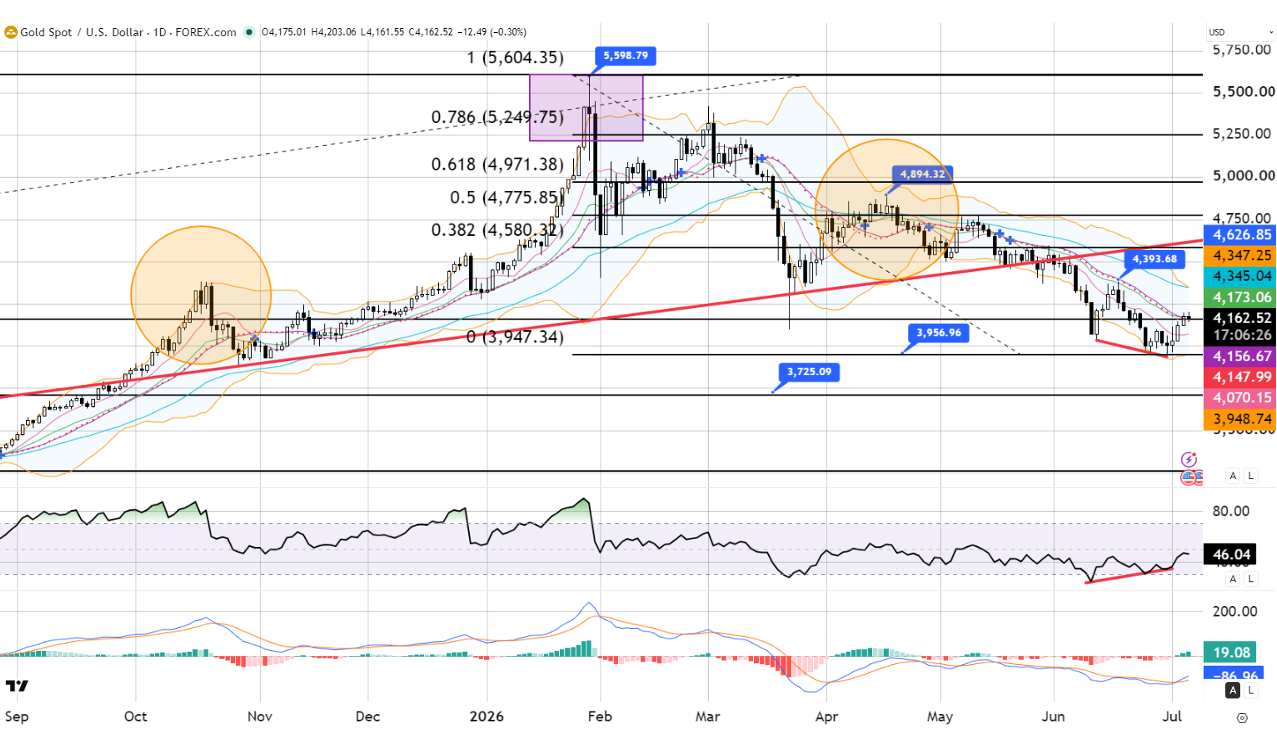
Technical View: $4162.52. A pivotal upturn in the charts favor a minor counter-trend recovery toward the 4230 daily supertrend, with scope to extend past 4270 toward the critical 50-day EMA at 4360, which is the last line of defense line for the bearish view. The broader structure remains bearish, targeting an ultimate breakdown to 3685/3570 once peaking action completes. However, a drop below the 4015, risk point invalidates this recovery possibility.
Silver
Silver traded above $62 an ounce on Monday, holding onto last week’s gains as weaker-than-expected US jobs data and lower oil prices led traders to scale back expectations for Federal Reserve interest rate hikes. Oil prices edged lower as recovering energy flows through the Strait of Hormuz and the prospect of increased OPEC+ supply fueled concerns about a potential glut. That has helped ease inflationary pressures that had previously heightened fears of further rate hikes and weighed on non-yielding precious metals. Meanwhile, data released last week showed US nonfarm payrolls increased by just 57,000 in June, the smallest gain in four months and well below forecasts of 110,000, prompting traders to reduce their bets on a September rate hike. According to the CME FedWatch tool, the probability of a hike fell to 50%, down from 66% before the report.
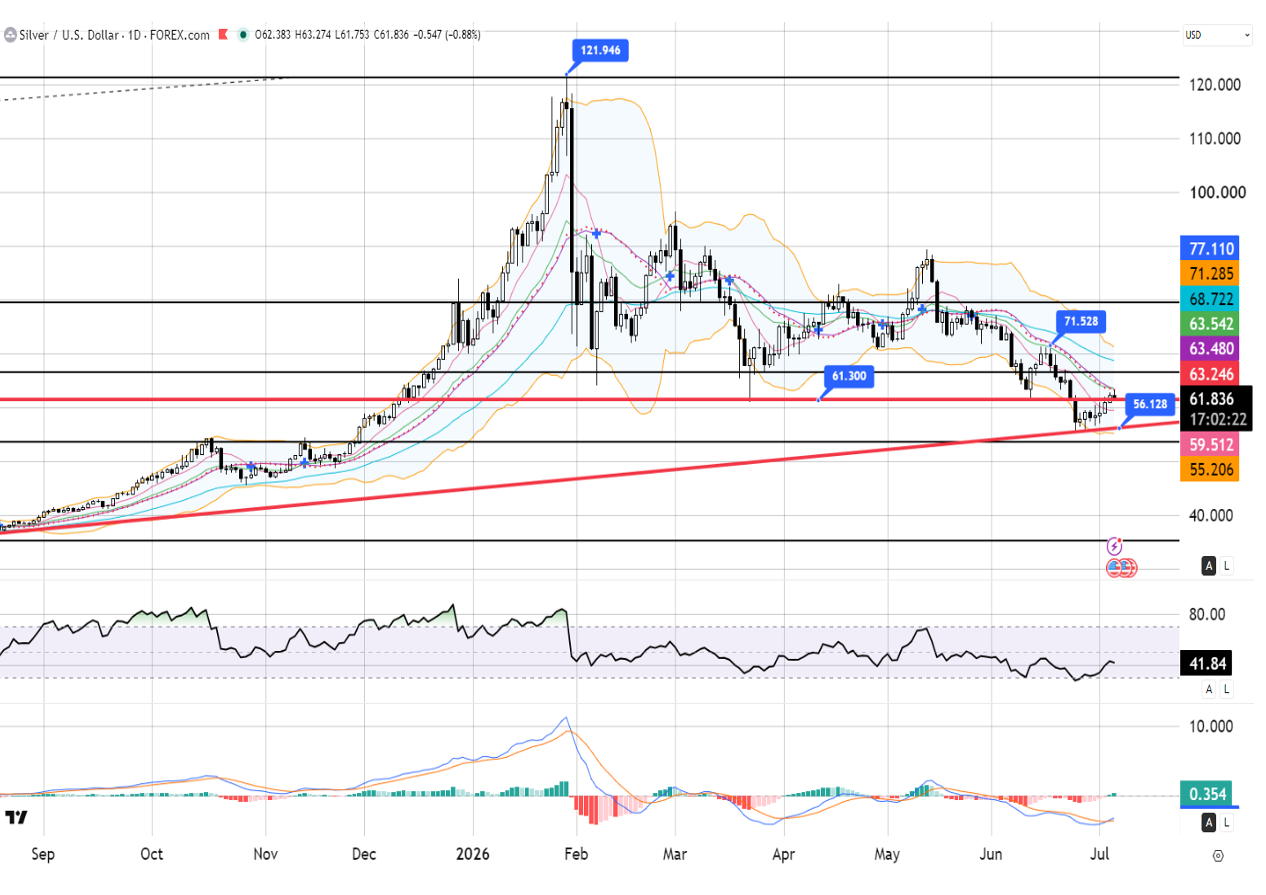
Technical View: $61.83. The support zone at $57–56 remains crucial, with prices holding above it likely to trigger a recovery towards $67–68. An unexpected fall below $55 could dash our bullish hopes.
Crude Oil
Crude oil traded near $68 per barrel on Monday, hovering at its lowest levels since late February as recovering energy flows through the Strait of Hormuz and expectations of higher OPEC+ output fueled concerns over a potential supply glut. OPEC+ members approved another modest increase in collective production quotas for next month, with seven countries led by Saudi Arabia and Russia agreeing to raise output by 188,000 barrels per day. The decision reflects the group’s confidence in boosting production as conditions across the Middle East continue to stabilize. Major Persian Gulf producers have also been increasing supply, with Saudi Arabia’s exports climbing close to pre-war levels, while the UAE, which left OPEC during the conflict, has likewise restored shipments. Meanwhile, oil and gas tanker traffic through the Strait of Hormuz showed signs of normalizing on Sunday, a day after several vessels made unexplained U-turns and detours along the critical energy route.
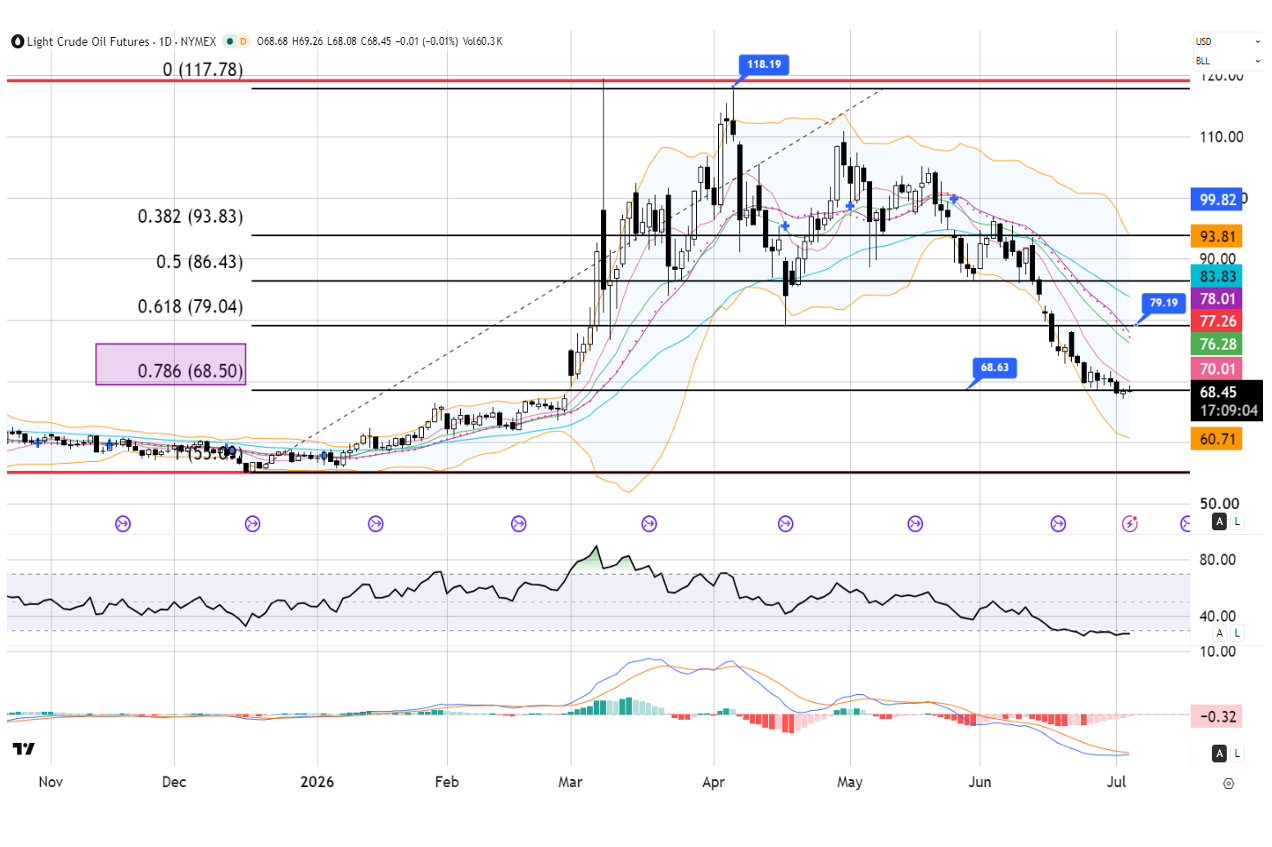
Technical View: $68.45. The weekly structure targets the 64.75/64.25 objectives, though a minor daily corrective rise toward 71.40/72.85 is underway. Overhead resistance caps this corrective zone to ideally pivot a downturn back toward the 67.05 low. However, an unexpected recovery past the 75.50 risk point neutralizes the intense downward momentum.
Copper
Copper prices are higher in early Asia trade after weaker-than-expected U.S. June non-farm payrolls reinforced expectations that the Fed will delay policy tightening, Changjiang Futures analysts say. A softer greenback improves the appeal of dollar denominated commodities such as copper. Fundamentals remain supportive, with inventories continuing to decline, showing ongoing supply tightness, they say. In China, downstream demand from copper rods remains stable, though a stronger pickup in end-user consumption has yet to emerge, they add. Copper is likely remain buoyed by improving macro sentiment and lower inventories. The three-month LME copper contract is up 0.6% at $13,446.50 a ton.
Technical View: $6.21. Immediate support holds above 6.05/6.00 to protect a minor push toward the 6.27/28 channel resistance, which must be overcome to expose the price to 6.40/6.47. Unexpected fall below 6.00 could turn the picture bearish once again.