Teaser: Gold fell to $4,150 per ounce on Friday, its lowest level since June 11, and was on track for a third weekly decline as a stronger US currency and mounting prospects of tighter monetary policy dampened demand. The dollar rose to a one year high after the Federal Reserve kept interest rates constant while signaling a more hawkish outlook. Geopolitical uncertainty remained in focus when Switzerland confirmed that planned US-Iran talks to end the Middle East crisis will not take place on Friday. The dollar index reached a record 13-month high, boosted by incoming Federal Reserve Chair Kevin Warsh's robust promise to combat inflation and maintain price stability. As a result, markets now expect at least one rate hike this year, up from a minuscule likelihood just a few weeks earlier. Nine of the Fed's
19 officials now expect at least one rate hike this year, with markets predicting a 70% chance of a rate increase by September.
Introduction:
Gold and silver experienced another volatile week as markets weighed fading geopolitical tensions against mounting expectations that interest rates may remain elevated for an extended period. Precious metals initially drew support from continued progress toward a potential US-Iran agreement, which helped ease concerns over disruptions in the Strait of Hormuz and kept pressure on crude prices. The resulting firm dollar and higher rate outlook reduced the appeal of non-yielding assets, limiting gains across the precious metals complex. Going into next week, bullion prices are likely to remain driven by Fed policy expectations, inflation trends, and developments in US-Iran talks, with softer geopolitical risks supportive but monetary headwinds continuing to cap advances.
WTI crude futures remained on the defensive this week as optimism surrounding a potential US-Iran agreement continued to strip away the geopolitical risk premium embedded in energy markets. Expectations of a gradual restoration of shipping activity through the Strait of Hormuz weighed on sentiment, encouraging traders to focus on improving supply prospects and a less supportive demand outlook. While inventory levels continued to point toward relatively tight market conditions, physical fundamentals took a back seat to diplomatic developments. Selling pressure intensified toward the end of the week as confidence grew that ceasefire discussions could be extended and immediate threats to regional energy flows would diminish. Going into next week, crude is expected to stay highly sensitive to geopolitical headlines, with continued diplomatic progress likely to maintain downside pressure, while any deterioration in negotiations could quickly restore supply concerns and increase volatility.
Gold:
Gold fell below $4,150 an ounce on Monday, extending its recent decline as higher oil prices kept inflation concerns elevated following renewed tensions during the opening day of US-Iran talks. President Donald Trump threatened fresh military action if Hezbollah continues its attacks on Israel and warned Tehran against shutting the Strait of Hormuz again. At the same time, Iranian media reported that Tehran had suspended negotiations in response to Trump’s remarks, although sources familiar with the discussions said talks were still underway. Gold was also weighed down by expectations of tighter monetary policy after the Federal Reserve left interest rates unchanged last week while adopting a more hawkish tone. Nine of the Fed’s 19 policymakers now anticipate at least one rate increase this year, with investors pricing in a potential hike as soon as September.
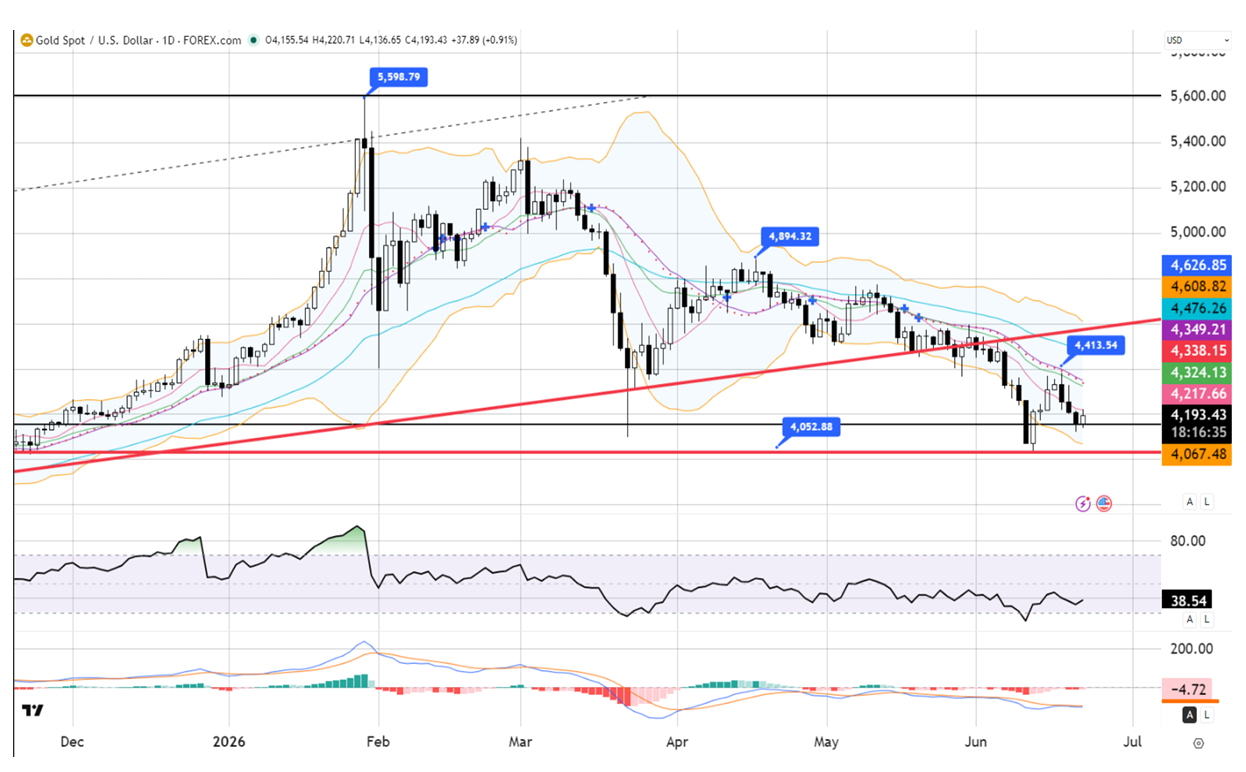
Technical View: $4193.43. Its structure remains aligned across weekly and daily charts, favoring a deeper decline. Major weekly support holds at 4023, below which selling could accelerate toward a volatility-based target at 3960. While daily resistance caps upside below 4245 or 4335, the price is poised to target 3935, and ideally 3780. Conversely, an unexpected recovery past 4385 invalidates this bearish outlook.
Silver
Silver fell toward $64 an ounce on Monday, extending its recent decline as higher oil prices kept inflation concerns elevated following renewed tensions during the opening day of US-Iran talks. President Donald Trump threatened fresh military action if Hezbollah continues its attacks on Israel and warned Tehran against shutting the Strait of Hormuz again. At the same time, Iranian media reported that Tehran had suspended negotiations in response to Trump’s remarks, although sources familiar with the discussions said talks were still underway. Silver was also weighed down by expectations of tighter monetary policy after the Federal Reserve left interest rates unchanged last week while adopting a more hawkish tone. Nine of the Fed’s 19 policymakers now anticipate at least one rate increase this year, with investors pricing in a potential hike as soon as September.
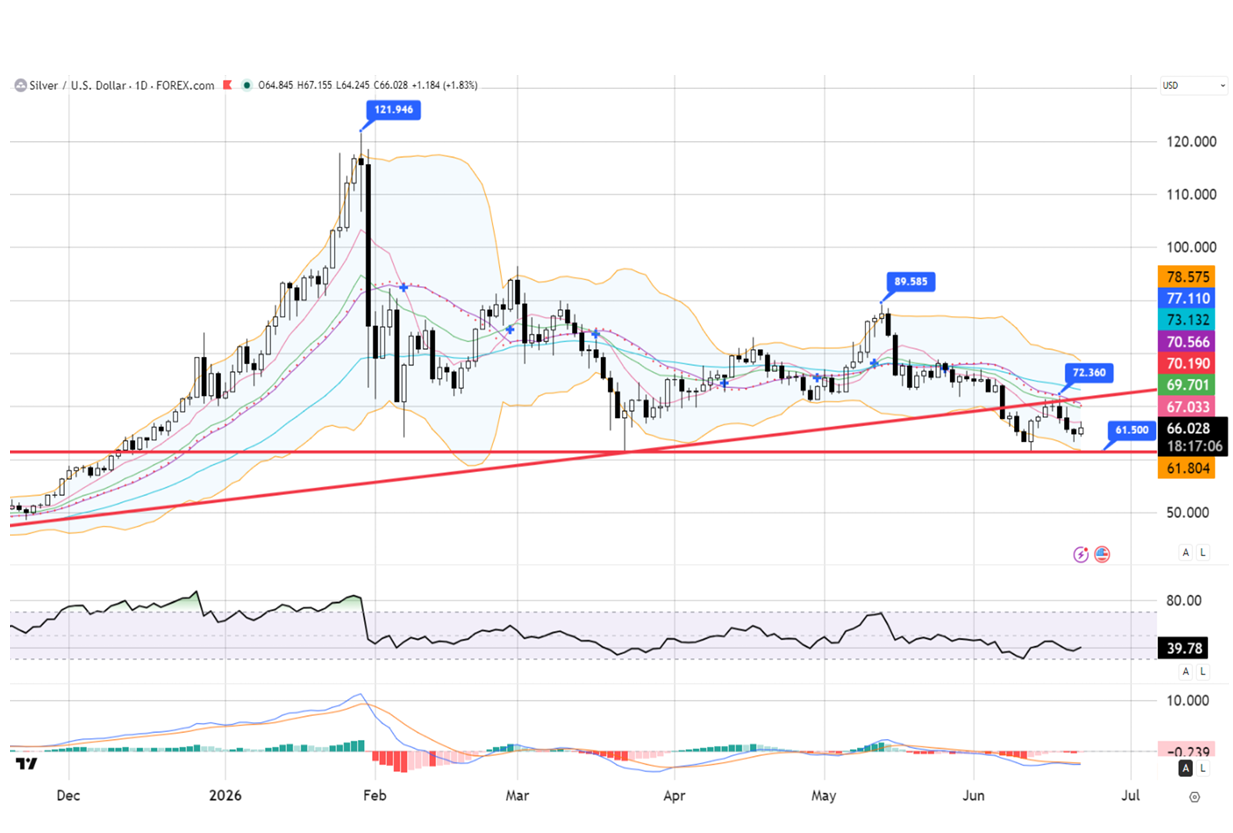
Technical View: $66.02. Support at $63–61.50 remains pivotal, with stability above this zone likely to pave the way for a move towards $72–73. An unexpected break below $61 would dampen the favored bullish outlook.
Crude Oil
Crude oil slipped below $76 per barrel on Monday, giving up earlier gains as investors reacted positively to signs of progress in ongoing peace talks between the US and Iran. According to a joint statement from Qatar and Pakistan, which are facilitating negotiations in Switzerland, both sides have agreed to a roadmap aimed at securing a final agreement within 60 days. Oil prices started the session sharply higher after President Donald Trump threatened fresh strikes if Hezbollah continues attacking Israel and warned Tehran against closing the Strait of Hormuz again. Iranian media later reported that Tehran had suspended talks in response to Trump's remarks, though sources familiar with the negotiations said discussions were still underway. Meanwhile, millions of barrels of crude continued to pass through the Strait of Hormuz over the weekend, while producers across the Persian Gulf prepared to increase output.
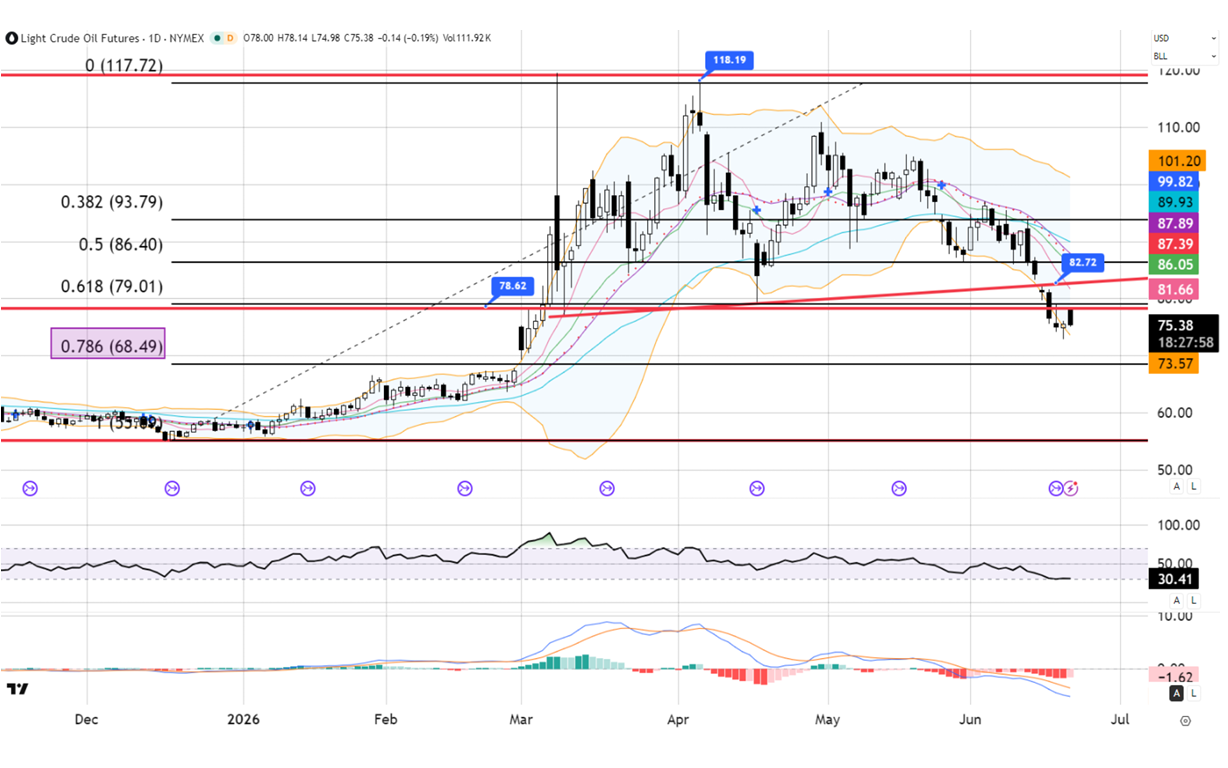
Technical View: $75.38. It completed a mean-reverting process, hitting a low of 72.83. Daily indicators suggest immediate upticks will face resistance caps near 77.60 or 79.40 before turning down for another decline toward 69.75, with an ideal target at 67.35. Conversely, an unexpected recovery past distant resistance at 83.95 invalidates this bearish outlook to attract fresh buying.
Copper
Copper prices rise in early Asia trade as supply remains tight and declining inventories outweighed concerns of a hawkish Fed and a strong U.S. dollar, says Everbright Futures analysts in a note. The market continues to find support from tightening copper concentrate supply, with domestic treatment charges falling to fresh record lows, underscoring ongoing feedstock shortages, they say. Demand remains mixed, with downstream consumers relying primarily on existing orders and showing limited willingness to chase higher prices. However, losses are limited by strong demand, the analysts say. The build out in data-center infrastructure critical for the development of artificial-intelligence is boosting consumption, they note. The three month LME copper contract is up 0.5% at $13,661.00 a ton.
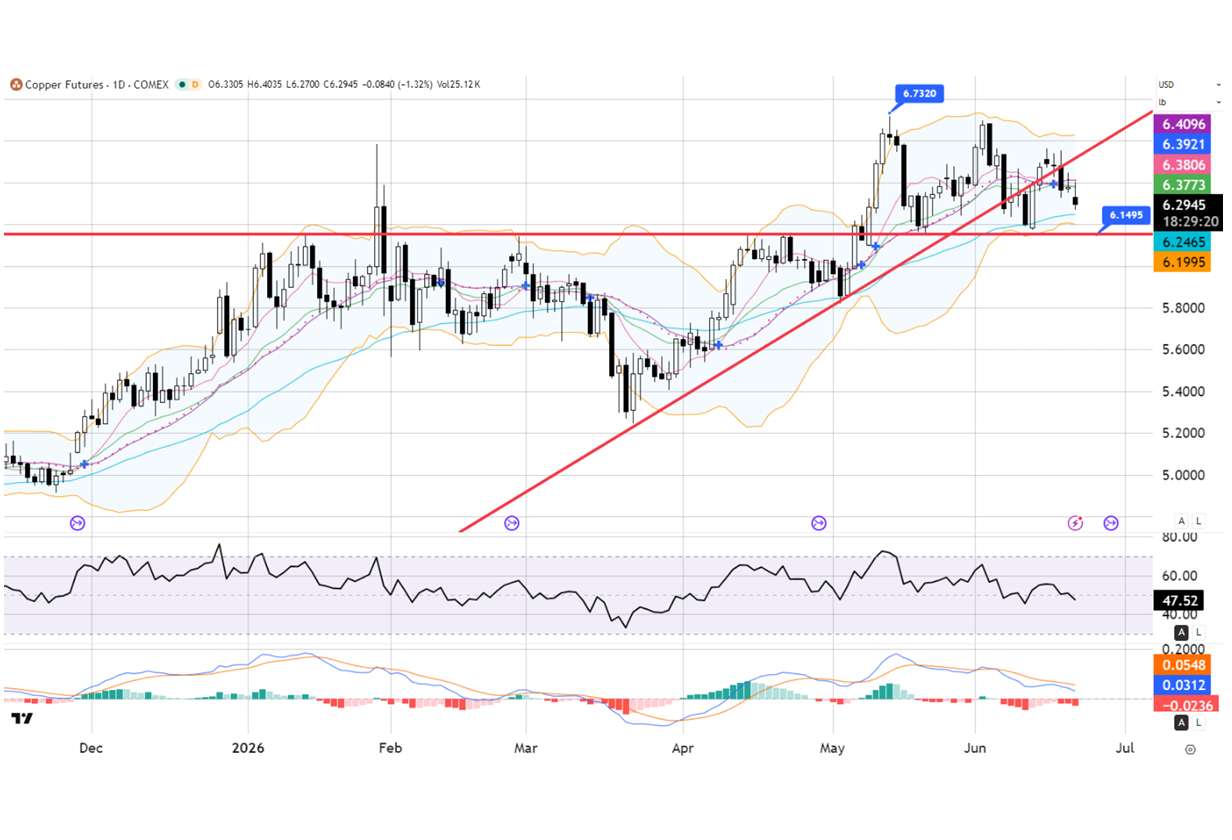
Technical View: $6.29. Supports to be observed at $6.15/6.20 where dips can hold for a rise to trendline resistance at $6.55/6.60 near term. Only an unexpected breakdown below $6.10 could dampen our bullish expectations.