Teaser: As rising oil prices increased prospects for a US interest rate hike this year and fueled fears about inflation, precious metals fell on Friday, setting up a second weekly decline. As investors continued to be pessimistic about the likelihood of a breakthrough in US-Iran peace negotiations, crude stayed close to four-year highs. Iran's foreign minister met with Pakistan's interior minister on Friday to explore options to end the war, according to Iranian media. Meanwhile, US Secretary of State Marco Rubio claimed "slight progress" in mediated negotiations but cautioned that Washington and Tehran were "not there yet" on a peace agreement. With a 55% possibility of at least one 25-basis-point increase by October, markets priced in a Federal Reserve rate hike by year-end due to the protracted dispute and inflation pressures. Fed Governor Christopher Waller expressed support for this viewpoint by indicating that he no longer thought the central bank should continue to have an easing bias in its policy statement.
Introduction:
Gold and silver rebounded this week after remaining under pressure in the previous phase, where elevated crude prices, rising inflation concerns, and expectations of prolonged higher interest rates weighed on bullion sentiment. Earlier weakness was driven by disappointment surrounding the Trump–Xi discussions and continued tensions around the Strait of Hormuz, which reinforced fears of persistent energy disruptions. However, sentiment improved as crude prices corrected lower following renewed diplomatic efforts between the US and Iran, easing mmediate inflation concerns and supporting a recovery in precious metals. Silver outperformed gold amid improving risk appetite and easing macro stress. Going into next week, precious metals are expected to remain sensitive to geopolitical developments, crude price direction, and shifts in inflation expectations, though downside pressure may begin stabilizing if energy markets continue to cool.
WTI crude July futures saw a steep correction this week after remaining elevated in the previous phase on persistent geopolitical tensions and disruptions around the Strait of Hormuz. Earlier strength in prices was driven by military exchanges between the US and Iran, tanker security concerns, and fears of prolonged supply disruptions. However, sentiment shifted sharply lower after renewed diplomatic engagement and reports of potential frameworks aimed at gradually restoring shipping flows through the strait. The decline accelerated despite continued inventory draws and underlying physical tightness, as markets increasingly priced in the possibility of de-escalation and partial normalization of energy flows. Going into next week, crude is expected to remain highly headline-driven, with markets closely watching whether diplomatic momentum continues or renewed tensions revive supply concerns once again.
Gold:
Gold climbed toward $4,600 an ounce on Monday, recovering losses from last week as increasing optimism over a potential US-Iran agreement eased concerns about inflation and interest rate hikes. Reports indicated that the proposed deal could reopen the Strait of Hormuz, end hostilities, release some frozen Iranian assets, and lay the groundwork for additional negotiations aimed at restricting Tehran’s nuclear program. However, President Donald Trump said the US would keep its blockade of the Strait of Hormuz in place until a formal agreement is finalized. Despite Monday’s rebound, gold remains roughly 13% lower since the Middle East conflict began, as fears of an energy-driven inflation shock fueled expectations that central banks may need to maintain tighter monetary policy. Investors also continued to assess the outlook for Federal Reserve policy after Governor Christopher Waller signaled he no longer believed the central bank should retain an easing bias in its policy statement.
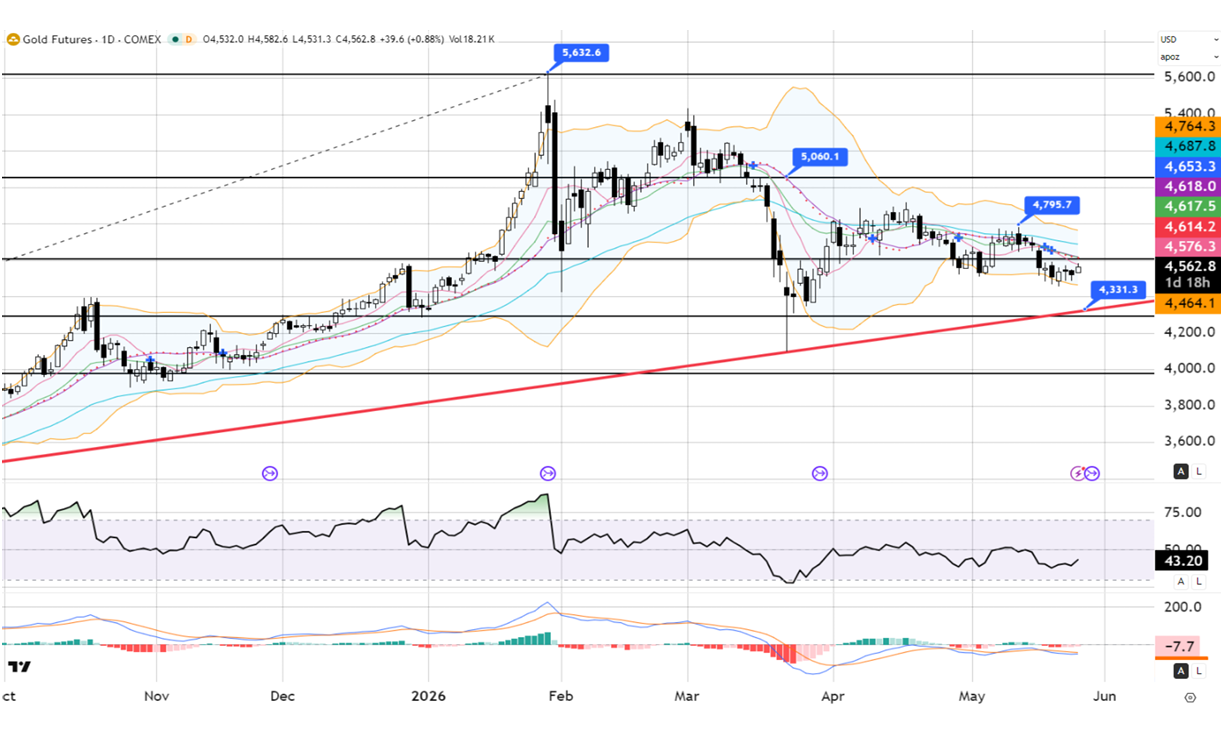
Technical View: $4562.8. The price has gradually slipped below major support markers on the weekly frame and sits positioned for a deeper extension toward the lower weekly Bollinger Band at $4310 or lower at 4238. On the daily chart, a broad cluster of resistances spread between 4610 and 4680 stands ready to cap near-term upside attempts. An unexpected recovery past the daily supertrend at 4715 would encourage near-term buying, though a decisive crossover above the nearest fractal top at 4774 serves as the clearer confirmation signal.
Silver
Silver climbed toward $78 an ounce on Monday, recovering losses from last week as increasing optimism over a potential US-Iran agreement eased concerns about inflation and interest rate hikes. Reports indicated that the proposed deal could reopen the Strait of Hormuz, end hostilities, release some frozen Iranian assets, and lay the groundwork for additional negotiations aimed at restricting Tehran’s nuclear program. However, President Donald Trump said the US would keep its blockade of the Strait of Hormuz in place until a formal agreement is finalized. Despite Monday’s rebound, silver remains roughly 17% lower since the Middle East conflict began, as fears of an energy-driven inflation shock fueled expectations that central banks may need to maintain tighter monetary policy. Investors also continued to assess the outlook for Federal Reserve policy after Governor Christopher Waller signaled he no longer believed the central bank should retain an easing bias in its policy statement.
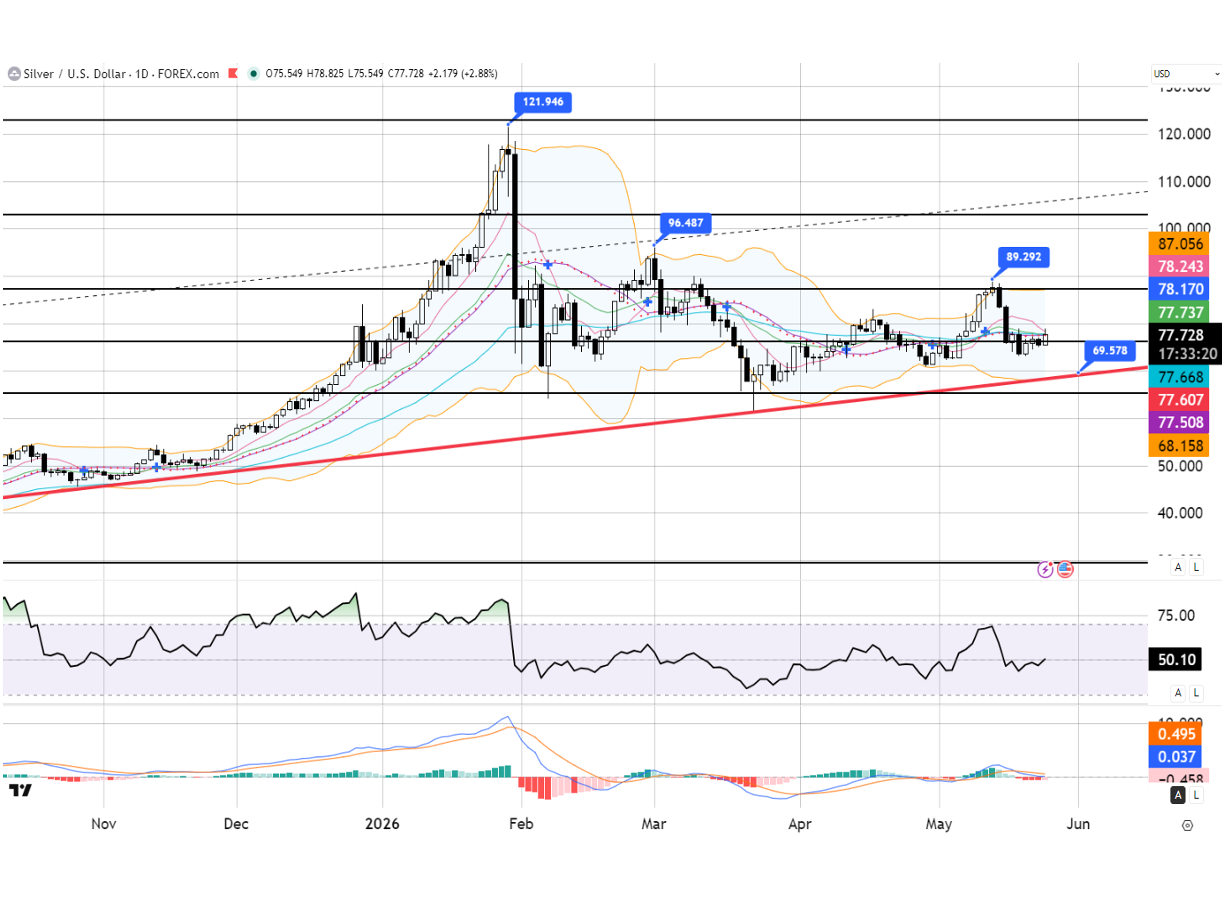
Technical View: $77.72. Supports at 69/67 could likely hold dips for a rise towards 85/87. Only an unexpected fall below $65.35 could dampen our bullish hopes.
Crude Oil
WTI crude futures dropped about 5% toward $91 per barrel on Monday, extending last week’s decline as the US and Iran moved closer to a deal. Reports indicated that the proposed deal could lead to the reopening of the Strait of Hormuz, an end to hostilities, the release of some frozen Iranian assets, and additional talks focused on curbing Tehran’s nuclear program. Still, President Donald Trump stated that Washington would keep its blockade of the Strait of Hormuz in place until a formal agreement is reached, adding that he would not “rush” into a deal. A full reopening of Hormuz would provide significant relief for major Asian economies and could push oil prices substantially lower, considering the waterway carries roughly one-fifth of global oil and LNG shipments. The Iran conflict and the dual blockade of Hormuz have severely disrupted global energy markets, forcing Middle Eastern producers to halt millions of barrels per day in crude output.
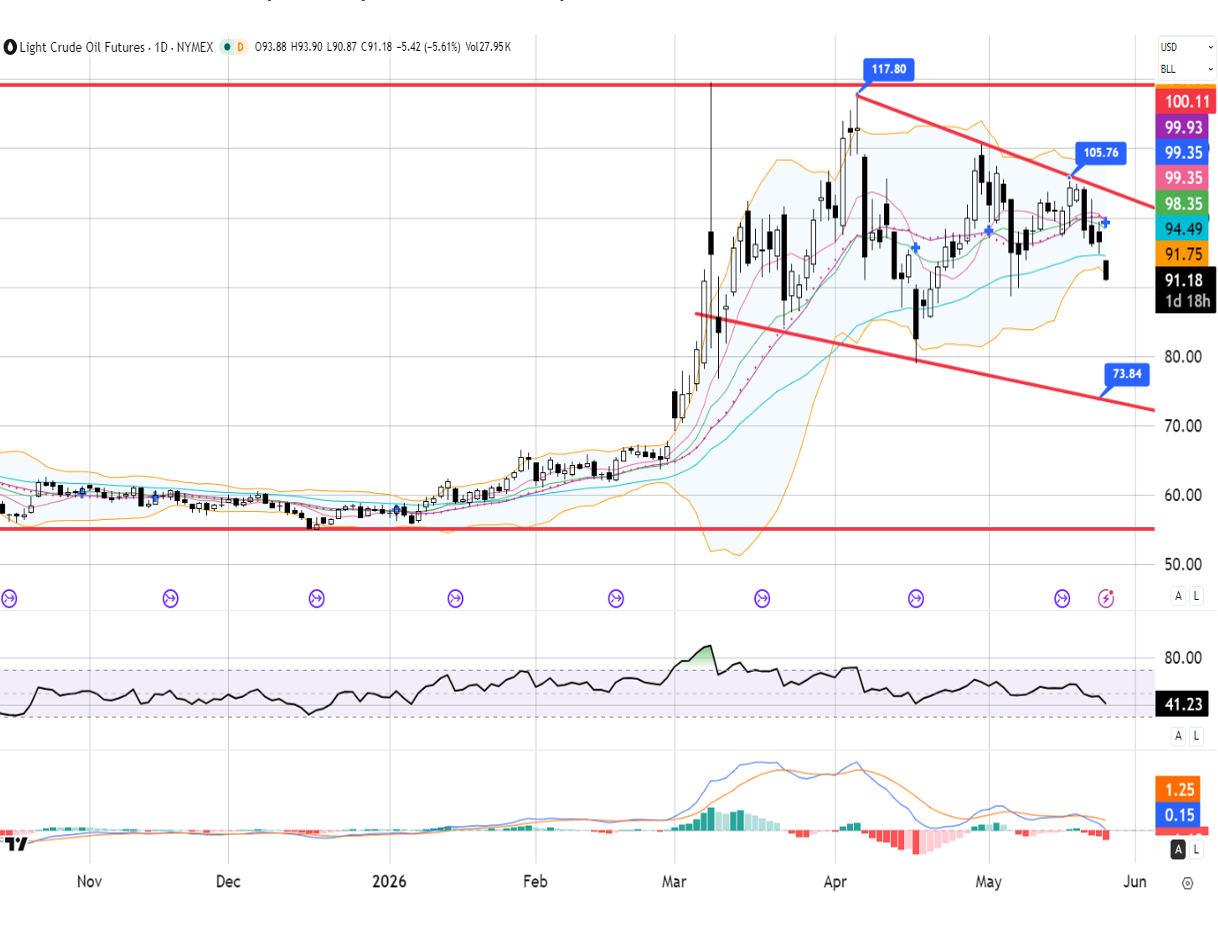
Technical View: $91.18. A negative weekly close hints at the possibility of a downward test toward the $91.85 weekly support or even the deeper 86.15 objective. Conversely, an unexpected upside flare-up carries the structural potential to reach the upper volatility band near 111.00. On the daily frame, downward bends across several oscillators are highly likely to keep recoveries capped below 101.25 and pull the price toward important supports at 93.55 or 90.00.
Copper
Copper closed at $6.37 on the previous trading day. The US-Iran agreement has not yet been finalised. Trump stated the deal was largely done but there was no rush to sign, demanding Iran abandon highly enriched uranium. Israel opposed the agreement, preparing for high-intensity operations and demanding the dismantlement of Iran's nuclear facilities; the next round of talks may be held on June 5. On the economic front, White House economic adviser Hassett indicated that if the agreement is reached, it could lead to a sharp drop in energy prices, thereby creating room for the US Fed to cut interest rates. However, the current interest rate futures market has fully priced in the US Fed raising rates as early as October and hiking by 25 basis points before year-end. Rising market expectations of a US-Iran deal pushed the copper price center higher. Fundamentals side, copper cathode spot cargo supply was ample, with imported copper continuing to arrive at ports and enter warehouses. However, elevated copper prices suppressed downstream purchase willingness, with enterprises mostly restocking on an as-needed basis. Market trades were sluggish, and demand-side recovery remained weak. Overall, spot copper prices are expected to move sideways in the doldrums today.
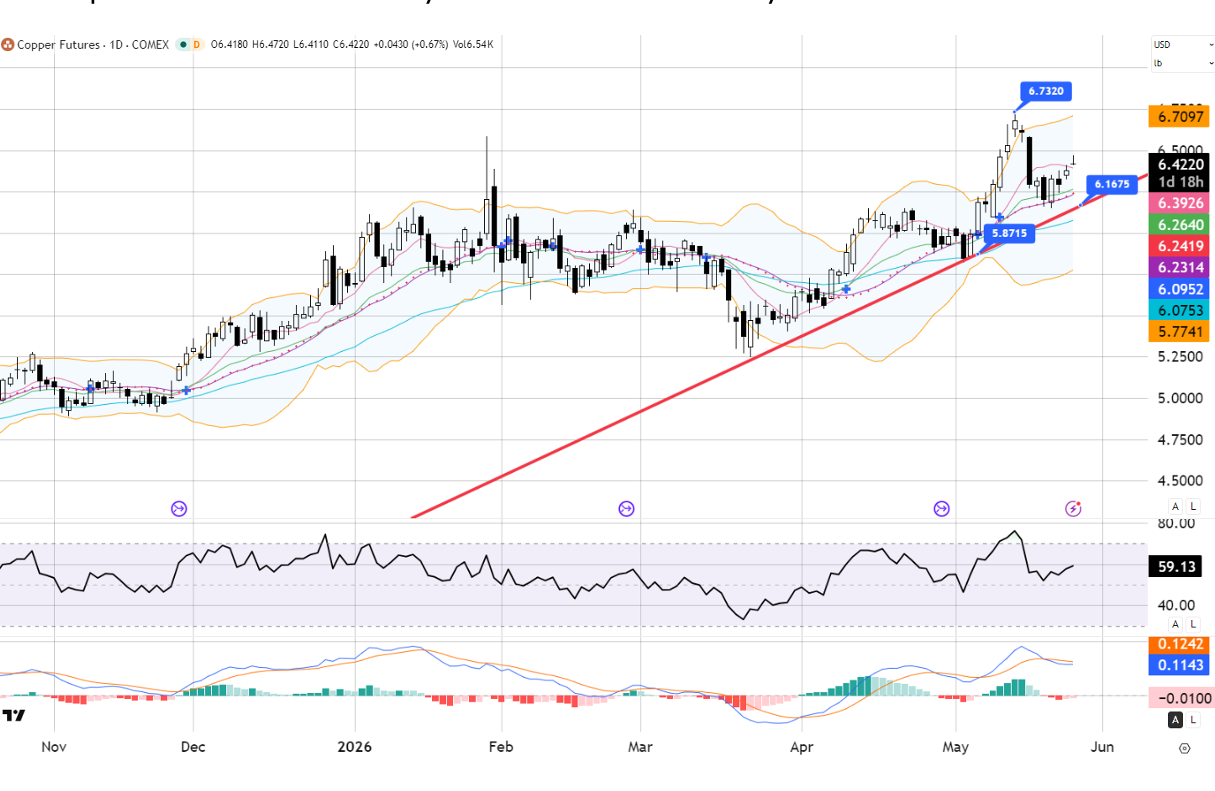
Technical View: $6.42. Supports to be observed at $6.25/6.30 where dips can hold for a rise to $6.65/6.70 near term. Only an unexpected breakout below $6.10 could dampen our bullish expectations.