Teaser: Supported by a drop in oil prices and the weakening of the US dollar, gold increased marginally to around $4,600 on Friday, extending gains of about 2% from the previous session. Following Pakistani officials' confirmation that Iran had issued a fresh peace offering, WTI prices fell more than 3% on Friday morning. At the same time, a dramatic increase in the value of the yen after alleged involvement by Japanese authorities put pressure on the dollar index, which was at a two-month low. However, since the start of the war, bullion prices have decreased by over 15%. This is because disruptions in the energy supply have raised fears about inflation and increased the likelihood that major central banks would keep interest rates high for an extended period of time or even tighten them further. In the meantime, central banks raised their gold reserves in the first quarter, according to data from the World Gold Council.
Introduction:
Gold and silver traded under sustained pressure as elevated crude prices reinforced inflation concerns and pushed central banks toward a more hawkish stance, raising real rate expectations and reducing the appeal of non-yielding assets. Before stabilising on lower oil and a weaker dollar, both metals saw a steep decrease in the middle of the phase, with silver exhibiting greater volatility because of its industrial connection. The overall trend is nonetheless limited by ongoing inflation threats and little room for short-term rate reductions, despite sporadic upturns. Silver was somewhat supported by industrial demand optimism, especially from investment flows connected to AI. In the future, metals are probably going to stay range-bound with a slight bearish tilt since attempts to rise could encounter resistance unless energy costs sharply decline or monetary policy expectations significantly change.
Due to a serious supply interruption caused by the Strait of Hormuz, which continued to effectively block a decent share of global energy supplies, crude oil prices skyrocketed. Persistent geopolitical tensions, ongoing naval blockades, and tightening physical fundamentals as evidenced by declining stockpiles and robust export demand all contributed to the increase. The market's sensitivity to geopolitical events was still quite strong, and any indications of a protracted battle caused price rises to accelerate. Renewed diplomatic signals led to a late retreat, but the underlying tight supply structure remained unchanged. In the future, crude is still structurally bullish but extremely sensitive to news stories, with little room for decline unless supply interruptions are reduced and regular trading flows are restored.
Gold:
Gold held firm above $4,600 an ounce on Monday as investors assessed President Donald Trump’s plan to escort ships through the Strait of Hormuz alongside signs of progress in US–Iran peace talks. The initiative is designed to help civilian vessels flagged in non-aligned countries exit the contested waterway and resume operations. At the same time, Iran said it is reviewing Washington’s response to its latest 14point proposal, boosting optimism for a diplomatic resolution to the conflict. Now in its tenth week, the Middle East war has driven energy prices sharply higher and heightened inflation risks, stoking concerns that central banks may keep interest rates elevated for longer or even tighten further. Gold remains down about 12% since the conflict began. Meanwhile, data from the World Gold Council showed that central banks increased their gold reserves in the first quarter.
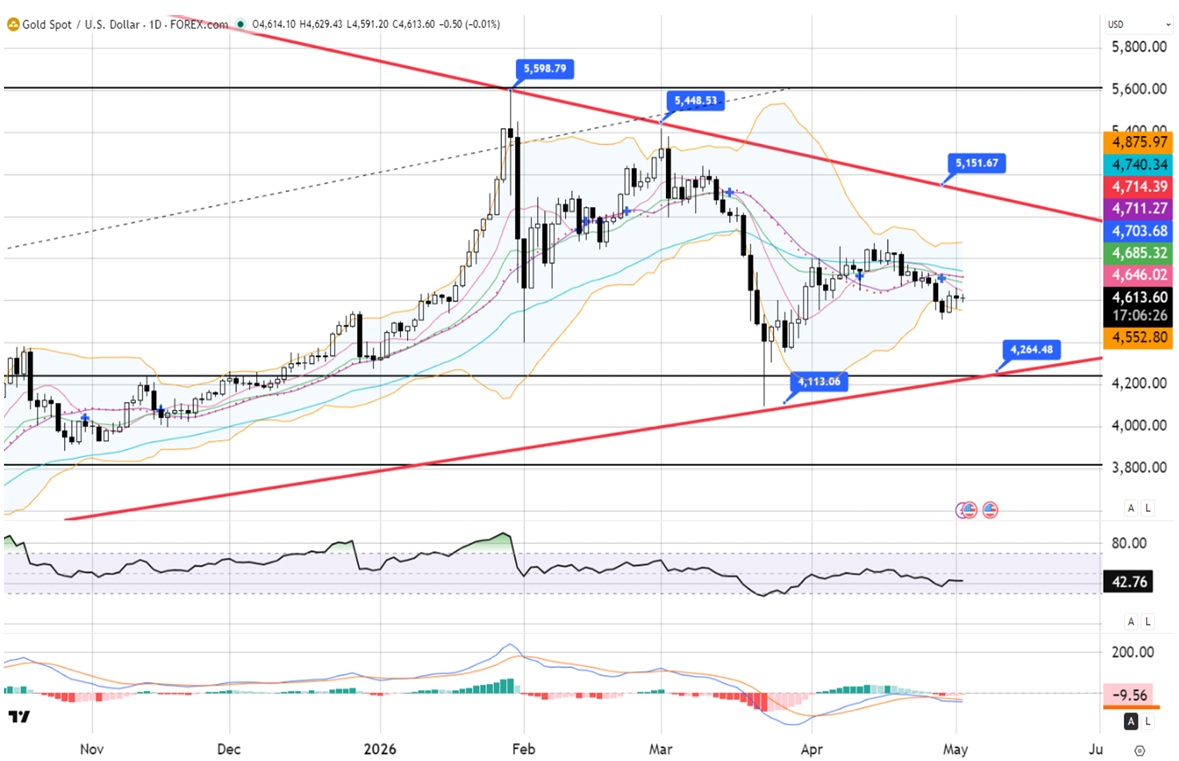
Technical View: $4715.67. Weekly charts suggest a mild negative tendency, targeting a potential dip toward 4420/4400(MCX:144850/144200) while remaining capped below 4735(MCX:155160). The daily structure similarly favors a decline toward 4505/4455(MCX:147630/146000), provided the price stays under 4695 (MCX:153850). A rise past 4780(MCX:156650) serves as the risk point, likely attracting buyers and shifting the trajectory toward 4880(MCX:159910). Breaking 4780(MCX:156650) would invalidate the bearish outlook and signal a reversal in momentum toward higher objectives.
Silver
Silver held above $75 an ounce on Monday after rising for two straight sessions, as investors assessed President Donald Trump’s plan to escort ships through the Strait of Hormuz alongside signs of progress in US–Iran peace talks. The initiative is designed to help civilian vessels flagged in non-aligned countries exit the contested waterway and resume operations. At the same time, Iran said it is reviewing Washington’s response to its latest 14-point proposal, boosting optimism for a diplomatic resolution to the conflict. Now in its tenth week, the Middle East war has driven energy prices sharply higher and heightened inflation risks, stoking concerns that central banks may keep interest rates elevated for longer or even tighten further. Silver remains down nearly 20% since the conflict began, but is finding support from signs of progress in efforts to end the Middle East conflict.
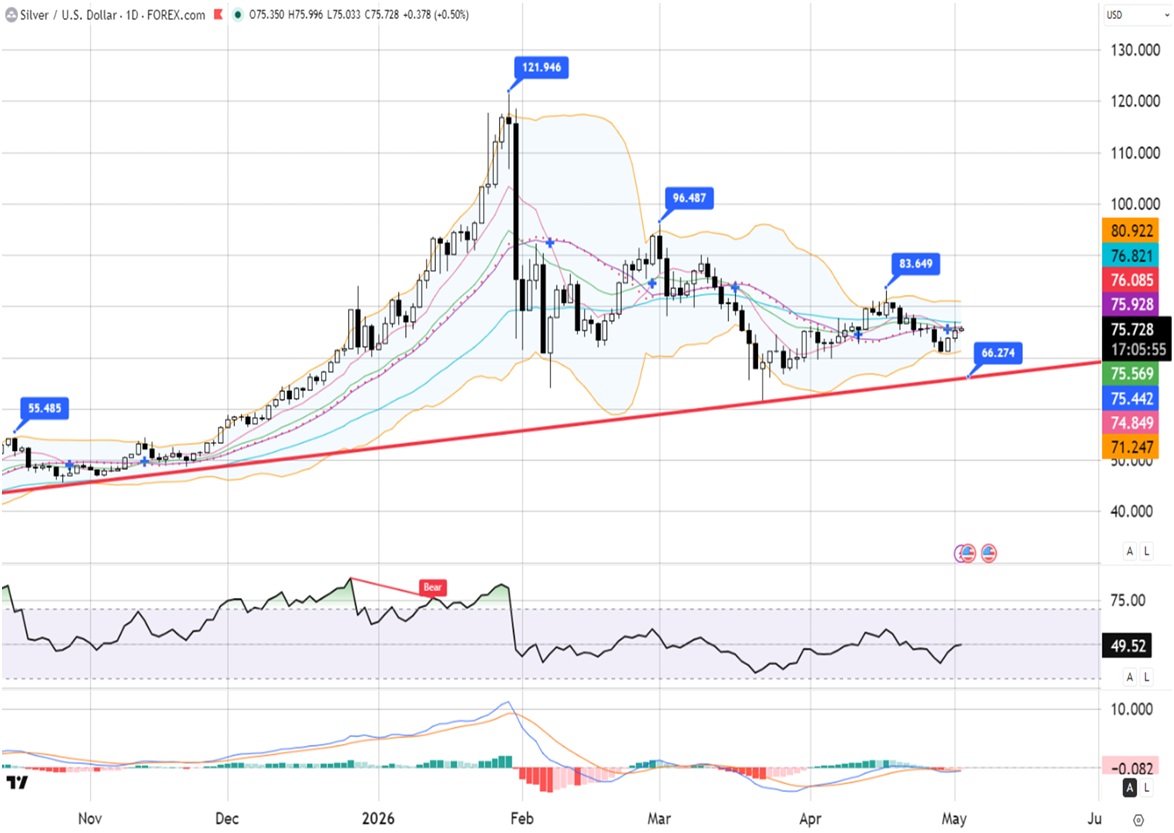
Technical View: $76.01. Resistance at $77/78(MCX:254800/258100) to cap any upticks for a decline to $70/71(MCX:231650/234950). An unexpected rise above $79(MCX:261450) can negate our bearish outlook.
Crude Oil
WTI crude futures fell to around $101 per barrel on Monday, sliding for the third straight session after US President Donald Trump said Washington would move to “free” stranded cargo ships stuck in the Strait of Hormuz and pointed to progress in negotiations with Iran. The initiative, dubbed “Project Freedom,” is aimed at assisting civilian vessels that are flagged in countries not affiliated with the conflict in exiting the contested waterway so they can resume their business, with implementation set to begin Monday. At the same time, Iran indicated it is reviewing Washington’s response to its latest 14-point proposal, raising hopes for a diplomatic resolution to the conflict. Oil prices have surged sharply this year as the Middle East conflict and the effective closure of the Strait of Hormuz disrupted global markets. Elsewhere, OPEC+ agreed to a symbolic increase in June production quotas, signalling a business-as-usual stance following the United Arab Emirates’ departure.
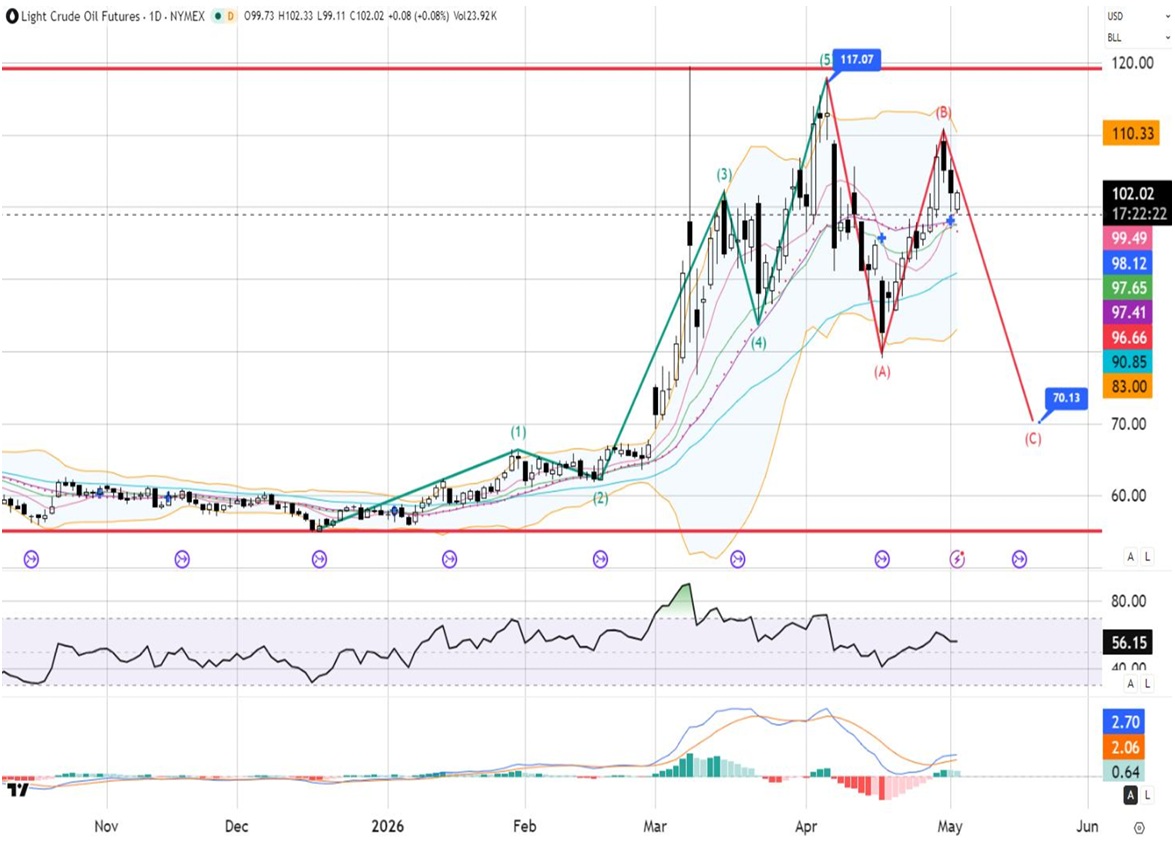
Technical View: $102.02. Weekly charts indicate a range breakout, targeting the upper volatility band at 114.00(MCX:10850). Daily technicals hint at a corrective dip toward supports at 97.50(MCX:9280) and 95.25(MCX:9065) before the next rally. Ideally, the price holds above 93.70(MCX: 8915) to preserve the uptrend. A break below the 93.50(MCX:8900) risk point shifts the focus toward major support at 87.50(MCX:8330), significantly damaging the bullish thesis and delaying the expected advance.
Copper
Copper futures remained above $5.95 per pound on Friday after rebounding in the previous session, supported by signs of improving demand in China despite ongoing headwinds from the Middle East conflict. Data released Thursday showed Chinese manufacturing activity expanded more than expected in April, as factories accelerated production to ship goods early to overseas buyers concerned that the Iran conflict could further drive up costs. The metal also continues to draw support from solid underlying fundamentals, with major technology firms securing long term supply agreements that are driving rapid expansion in data centre infrastructure, reinforcing copper demand given its critical role in electrification and power grid networks. However, Commerzbank cautioned that elevated copper prices are increasingly acting as a key constraint on further upside, potentially limiting additional gains in the near term.
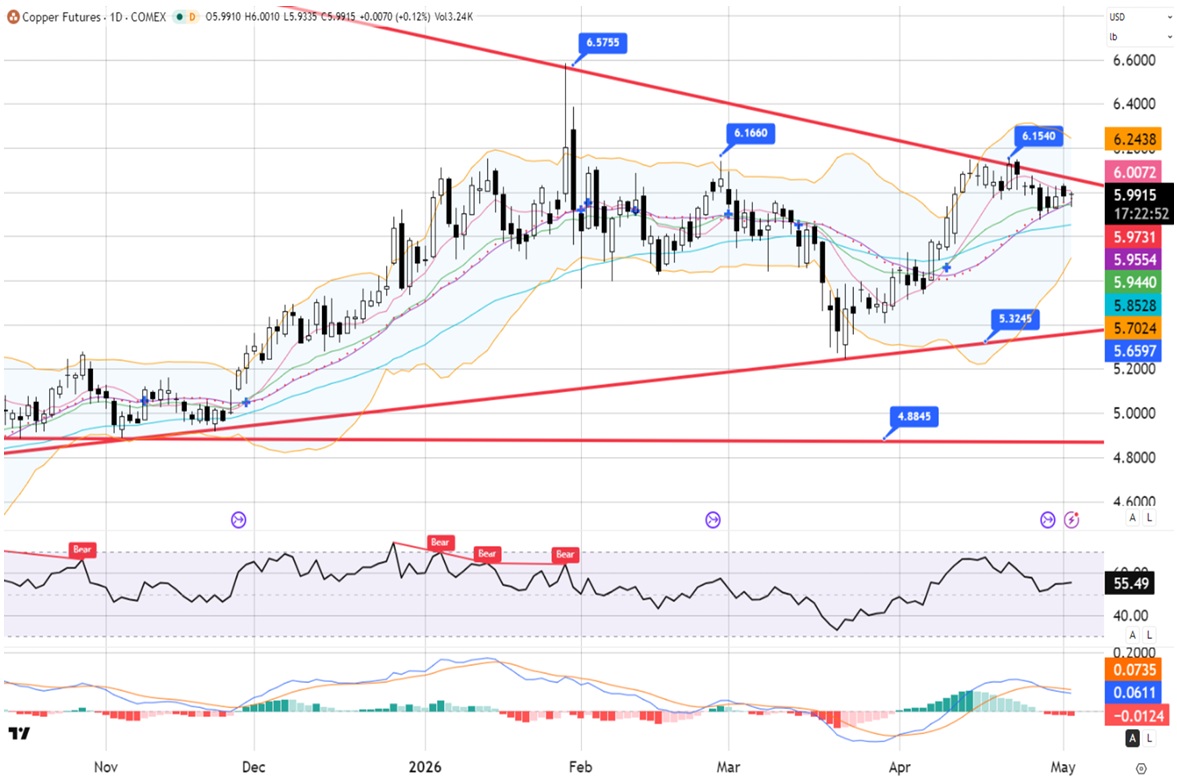
Technical View: $5.99. Gains could likely cap at $6.15/6.10 (MCX:1320/1310) for a fall towards 5.85/80(MCX:1255/1245) near term or even lower to 5.60(MCX: 1200) trendline supports if momentum persists. Favored view is neutral with a bearish bias near term. Only an unexpected rise above 6.20(MCX:1330) could change the outlook to bullish again.