Teaser: Gold rose mildly after the Justice Department dropped its probe into outgoing Fed Chair Jerome Powell, supporting both gold and silver futures. The development opens the door for Kevin Warsh to succeed Powell, prompting expectations of lower interest rates sooner rather than later. On Friday, gold attempted a rebound, climbing above $4,700/troy ounce as cautious optimism emerged around potential progress in US-Iran peace talks. Latest developments on 24th April indicated a possible meeting between US and Iran over ending the near two-month war, which weighed on crude oil. The meeting was cancelled last minute, and both sides in a naval standoff assumed aggressive posture attacking ships passing through strait of Hormuz. This supported crude oil prices. While doubts remain and recent talks have delivered limited progress, the continued blockage of the Strait of Hormuz has kept energy prices elevated. As a result, gold remains on track for a weekly loss of over 2%, with non-yielding bullion under pressure from rising inflation concerns and expectations of tighter monetary policy. We expect volatility to persist in bullion and energy markets pending any new developments in the US-Iran war.
Introduction:Gold and silver remained under pressure through the week as escalating tensions around the Strait of Hormuz lifted oil prices, driving inflation concerns, yields, and the dollar higher. Gold fell toward $4,700 and silver below $79 early on, as vessel seizures, naval blockades, and stalled US–Iran talks weighed on sentiment. A brief midweek recovery saw gold rise above $4,750 and silver stabilise near $78, but gains were capped by persistent inflation risks. By week’s end, gold hovered near $4,700 while silver rebounded toward $76–79 on cautious optimism around talks in Pakistan. Both remain well below pre-conflict levels, with gold down nearly 10% and silver around 15–17%. Looking ahead, bullion is likely to stay volatile, with upside dependent on de-escalation while disruptions keep prices capped. Crude oil dominated market direction, rallying from the mid-$80s to above $94 as the US-Iran standoff intensified, marked by vessel seizures, attacks on shipping, and a continued blockade keeping the Strait largely closed. Supply disruptions deepened, with an estimated 4–5 million barrels per day impacted, tightening global availability, especially for Asia. Continued attacks sustained the risk premium, while Iran’s refusal to reopen the Strait prolonged uncertainty. Prices eased slightly at the end of the week on tentative diplomatic signals, but WTI still posted a strong weekly gain of around 13%. Even with progress, normalization of flows may take time. Volatility is likely to persist in the coming week.
Gold:
Gold fell below $4,700 an ounce on Monday, extending last week’s losses as attempts to revive US–Iran peace negotiations faltered and the Strait of Hormuz remained effectively closed, heightening concerns over persistent inflationary pressures. US President Donald Trump cancelled a planned trip by top envoys to resume talks with Iran in Islamabad, while Tehran reiterated it would not engage in negotiations under threats or blockade. Meanwhile, oil prices rallied as the Middle East conflict entered its ninth week, triggering what the IEA has characterized as the largest energy supply shock on record. Elevated inflation risks have strengthened expectations that central banks may keep interest rates higher for longer or even tighten further, weighing on non-yielding bullion. The US Federal Reserve is also expected to proceed cautiously, with gradual rate cuts anticipated under incoming Chair Kevin Warsh.
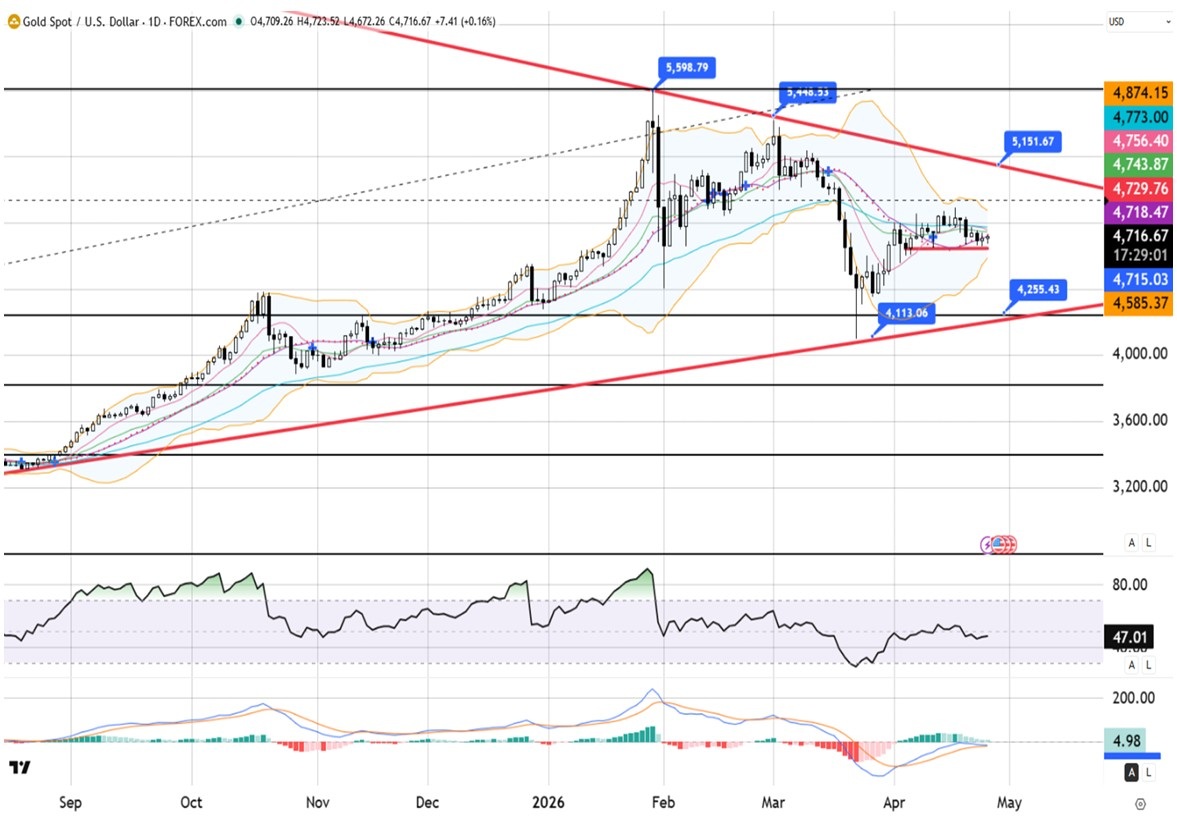
Technical View: $4715.67. It appears poised for a corrective dip toward the 4590/4580 zone, provided it remains capped by $4835. Given the last five weeks of price action, an extension toward the 4510/4490 area remains a distinct possibility. Resistance is clustered between 4760/4775, while a decisive push above the fractal top at 4895 would signal a surge toward 5040/5070. Currently, charts suggest a period of tight consolidation is underway.
Silver
Silver traded below $76 an ounce on Monday, holding losses from last week as attempts to revive US–Iran peace negotiations faltered and the Strait of Hormuz remained effectively closed, heightening concerns over persistent inflationary pressures. US President Donald Trump cancelled a planned trip by top envoys to resume talks with Iran in Islamabad, while Tehran reiterated it would not engage in negotiations under threats or blockade. Meanwhile, oil prices rallied as the Middle East conflict entered its ninth week, triggering what the IEA has characterized as the largest energy supply shock on record. Elevated inflation risks have strengthened expectations that central banks may keep interest rates higher for longer or even tighten further, weighing on non-yielding precious metals. The US Federal Reserve is also expected to proceed cautiously, with gradual rate cuts anticipated under incoming Chair Kevin Warsh.
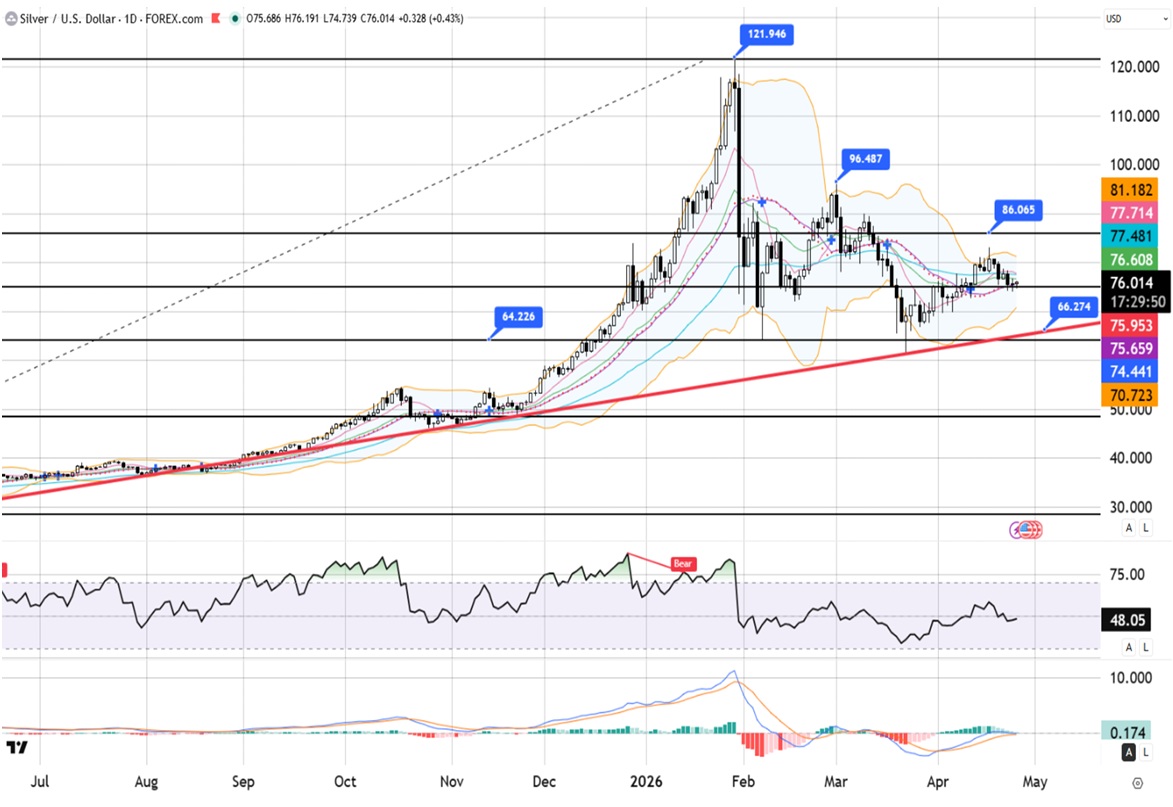
Technical View: $76.01. Price can be seen facing resistance near the $77–78 zone, where gains are getting capped and sellers are getting more active. As long resistance holds, the favored view remains mildly bearish with scope of price testing $70–71 support region or even lower to $66 if momentum sustains. Only an unexpected rise above $80 could turn the picture bullish again.
Crude Oil
WTI crude futures climbed above $96 per barrel on Monday, recouping losses from the previous session as the Strait of Hormuz remains effectively closed amid stalled US–Iran peace talks. US President Donald Trump has instructed negotiators to suspend discussions, while Iranian President Masoud Pezeshkian reiterated that Tehran will not engage in “imposed negotiations under threats or blockade.” The Iran war has now entered its ninth week, triggering what the IEA has described as the biggest energy supply shock on record, while intensifying inflationary pressures and weighing on the global growth outlook. The ongoing US naval blockade continues to constrain Iranian crude exports and stands as a key barrier to any diplomatic progress. Analysts note that even if the strait reopens, it could take months for oil flows to normalize, leaving supplies constrained and sustaining upward pressure on global energy markets.
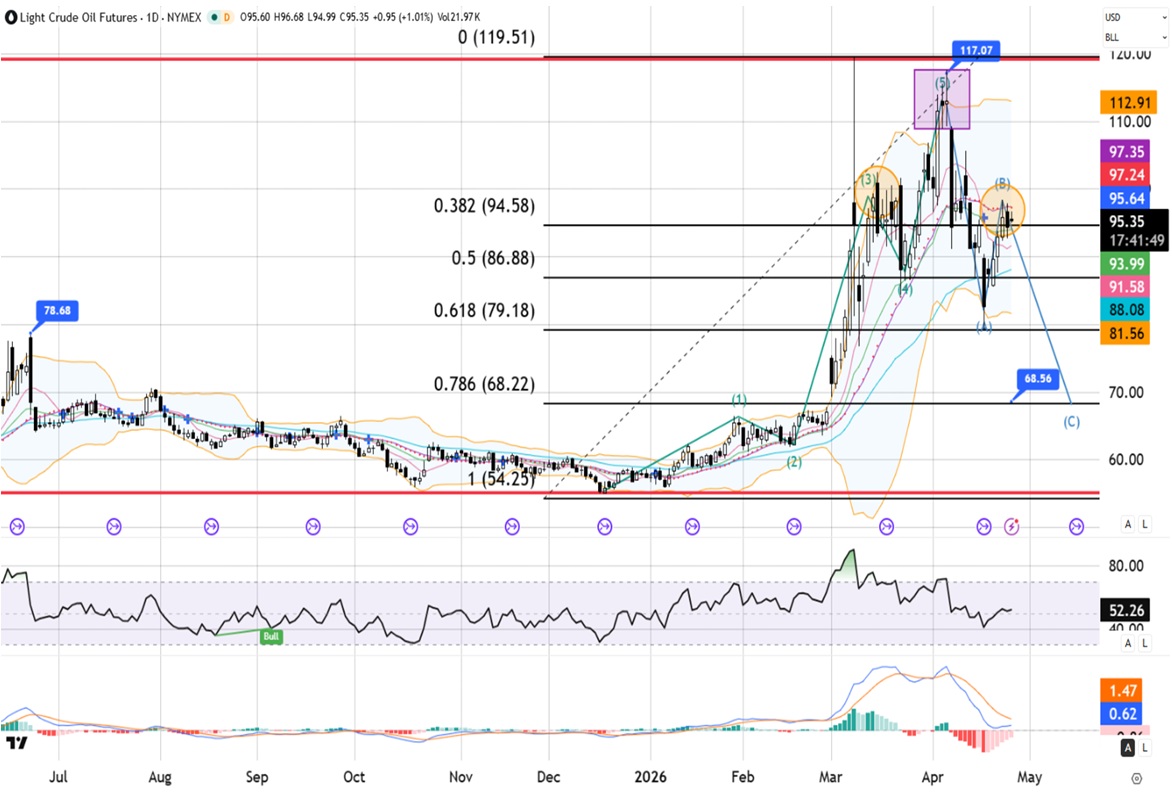
Technical View: $94.35. Price remains range-bound with breakout resistance established at $98.90, followed by significant barriers at 100.45 and 101.20; a successful breach above 101.20 could target 104.25. Key supports are situated at 90.50 and 85.80. The bullish outlook only neutralizes if prices slip below 82.90, while a break of the 77.35 channel support would signal a more profound structural weakness. We can see a Head & Shoulder Top pattern forming in the charts although the pattern is not complete yet, it could be an early warning of a deep correction in the coming weeks.
Copper
Copper futures slipped back toward $6 per pound on Friday after reaching near two month highs in the prior session, as stalled US-Iran peace efforts and continued disruption in the Strait of Hormuz kept energy prices elevated and inflation risks in focus. Tehran continues to maintain control of the strategic waterway and has reportedly fired on commercial vessels this week, while the US blockade of Iranian ports remains in place, sustaining pressure on the Islamic Republic. Copper and other industrial metals have faced headwinds from inflation concerns that could prompt tighter monetary policy, alongside growth risks that may soften global industrial demand. Still, downside ressure has been partially cushioned by restocking activity in China ahead of the Labor Day holiday from May 1 to 5. Official data also showed Chinese smelters produced a record 1.33 million tons of refined copper in March.
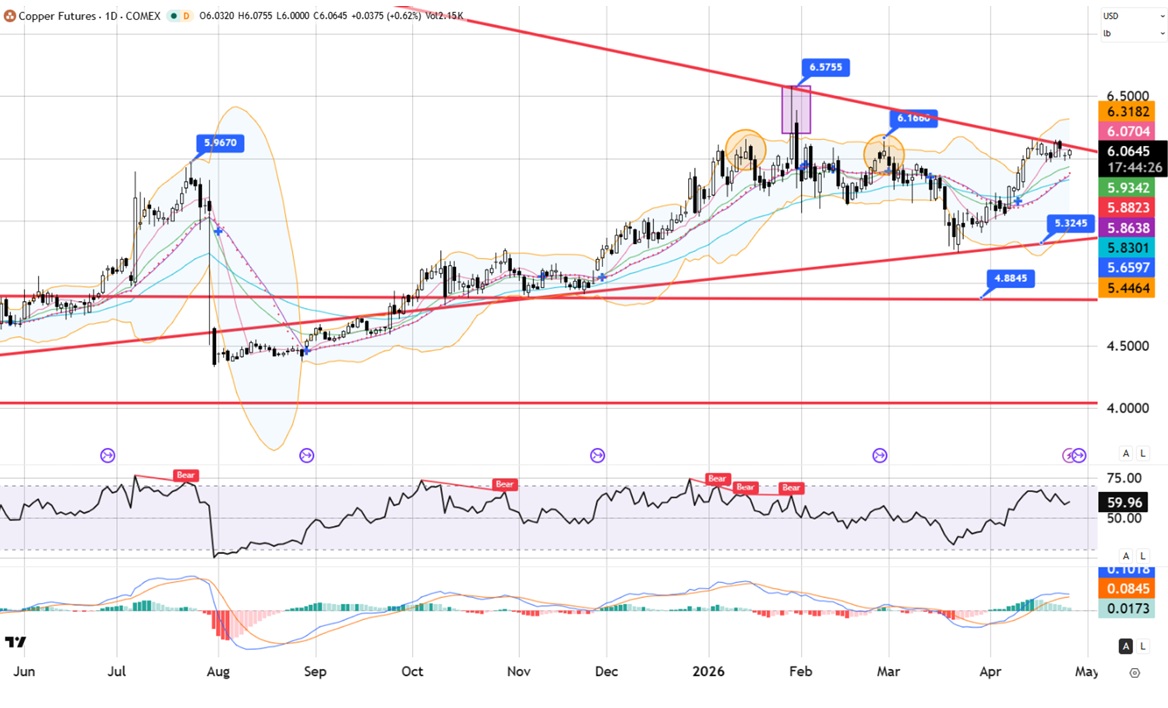
Technical View: $6.06. Gains could likely cap at $6.17 for a fall towards 5.90/80 near term or even lower to 5.60/50 trendline supports if momentum persists. Favored view is neutral with a bearish bias near term. Only an unexpected rise above 6.20 could change the outlook to bullish again.