Mr. Gnansekhar
Teaser: Gold prices remained under pressure during the previous week, stabilizing
near $4,050 per ounce after recent losses as investors assessed escalating Middle
East tensions and their implications for energy-driven inflation. A firmer US dollar
ahead of next week's Federal Reserve meeting further weighed on bullion by
reducing its appeal to overseas buyers. While the Fed is widely expected to leave
rates unchanged, markets continue to price in a strong possibility of a September
rate hike. The European Central Bank also kept rates steady while signaling further
tightening remains possible. Going forward, gold is expected to remain sensitive to
crude oil prices, geopolitical developments and central bank guidance, with
persistent inflation risks likely to limit upside unless monetary policy expectations
soften or geopolitical tensions ease.
Introduction:
Gold prices remained under pressure for much of the previous week. However,
persistent geopolitical uncertainty, resilient physical demand from Asia and
expectations that major central banks could gradually shift towards policy easing
later this year helped cushion the downside. Going into the coming week, precious
metals are expected to remain supported by safe-haven demand and evolving
monetary policy expectations, although movements in crude oil, the US dollar and
geopolitical developments are likely to keep volatility elevated.
WTI crude futures remained elevated during the week as ongoing tensions between
the United States and Iran sustained concerns over potential supply disruptions
across the Middle East. Uncertainty surrounding the Strait of Hormuz and continued
geopolitical risks maintained a sizeable risk premium despite expectations of higher
OPEC+ production and signs of softer global demand growth. However, the market
struggled to extend gains as concerns over slowing economic activity, resilient non
OPEC supply growth and the absence of any meaningful disruption to physical oil
exports encouraged periodic profit-taking.
Higher crude prices have also raised concerns over demand destruction, particularly
in price-sensitive emerging markets, while expectations of additional OPEC+ supply
increases in the coming months continue to temper the medium-term outlook. US
crude inventories and refining activity remained broadly supportive, but improving
global supply availability and slowing consumption growth suggest that the market
could gradually become better balanced. Going into the coming week, crude prices
may face mild downside pressure if geopolitical tensions continue to stabilize, with
developments in the Middle East, OPEC+ policy, inventory trends and global
macroeconomic data expected to remain the key drivers of price direction.
Gold
Gold climbed 1% toward $4,100 an ounce on Monday, moving away from nine-month
lows as oil prices dropped sharply following a pause in hostilities between the US and
Iran over the weekend, reducing concerns over supply disruptions and inflation. The
US suspended its nearly two-week campaign of strikes against Iran beginning late
Friday without an official announcement, while Tehran said it had ended its retaliatory
strikes in response and held discussions with Oman regarding the Strait of Hormuz.
Gold struggled in recent weeks amid escalating hostilities in the Middle East, with
supply disruption spreading from the Strait of Hormuz to the Red Sea. Meanwhile,
the Federal Reserve is widely expected to leave interest rates unchanged on
Wednesday before raising them in September, although some market participants
believe the central bank could move as early as this week's meeting in response to
renewed inflationary pressures.
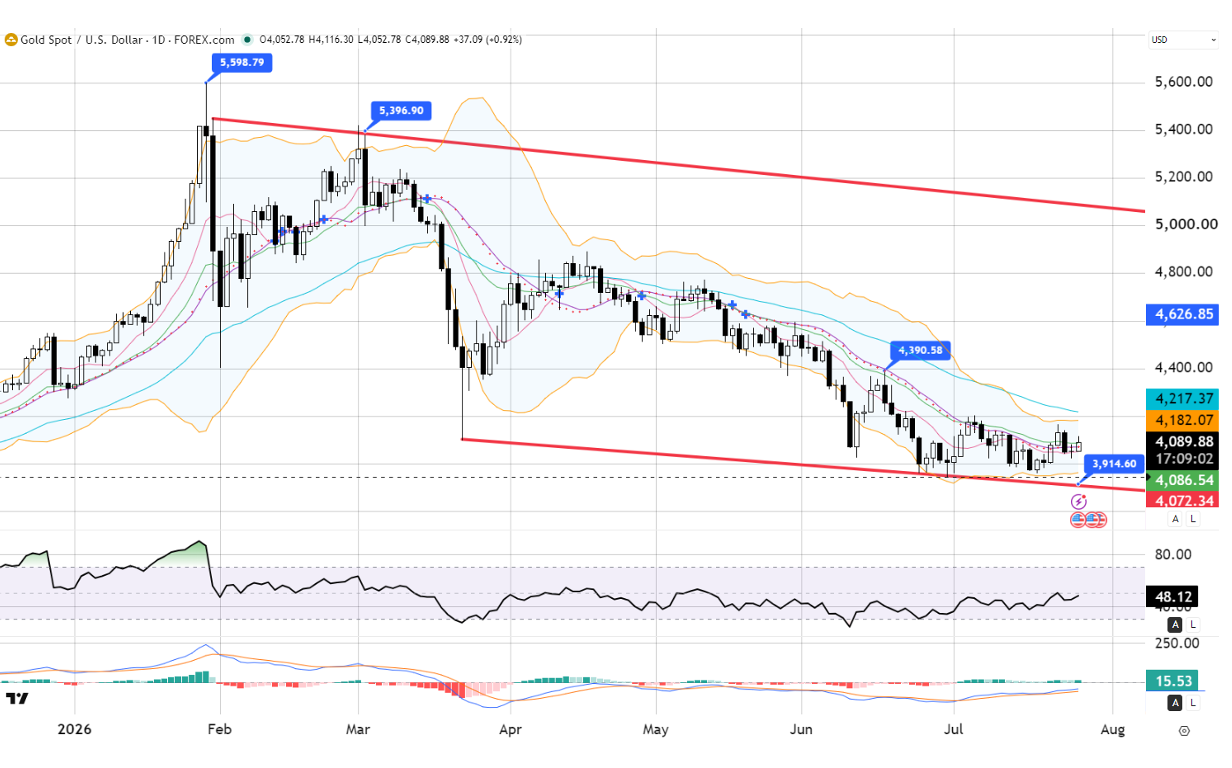
Technical View: $4089.88. Indicators suggest a temporary upward
correction toward 4150/4170 before the broader fortnightly downtrend
toward 3770 resumes. Immediate supports rest at 3960/3940. A break
below 3940 dampens bounce prospects, whereas a direct rise past 4185
opens upside extensions toward 4230.
Silver
Silver climbed more than 2% toward $60 an ounce on Monday, moving away from
eight-month lows as oil prices dropped sharply following a pause in hostilities
between the US and Iran over the weekend, reducing concerns over supply
disruptions and inflation. The US suspended its nearly two-week campaign of strikes
against Iran beginning late Friday without an official announcement, while Tehran
said it had ended its retaliatory strikes in response and held discussions with Oman
regarding the Strait of Hormuz. Precious metals struggled in recent weeks amid
escalating hostilities in the Middle East, with supply disruption spreading from the
Strait of Hormuz to the Red Sea. Meanwhile, the Federal Reserve is widely expected
to leave interest rates unchanged on Wednesday before raising them in September,
although some market participants believe the central bank could move as early as
this week's meeting in response to renewed inflationary pressures.
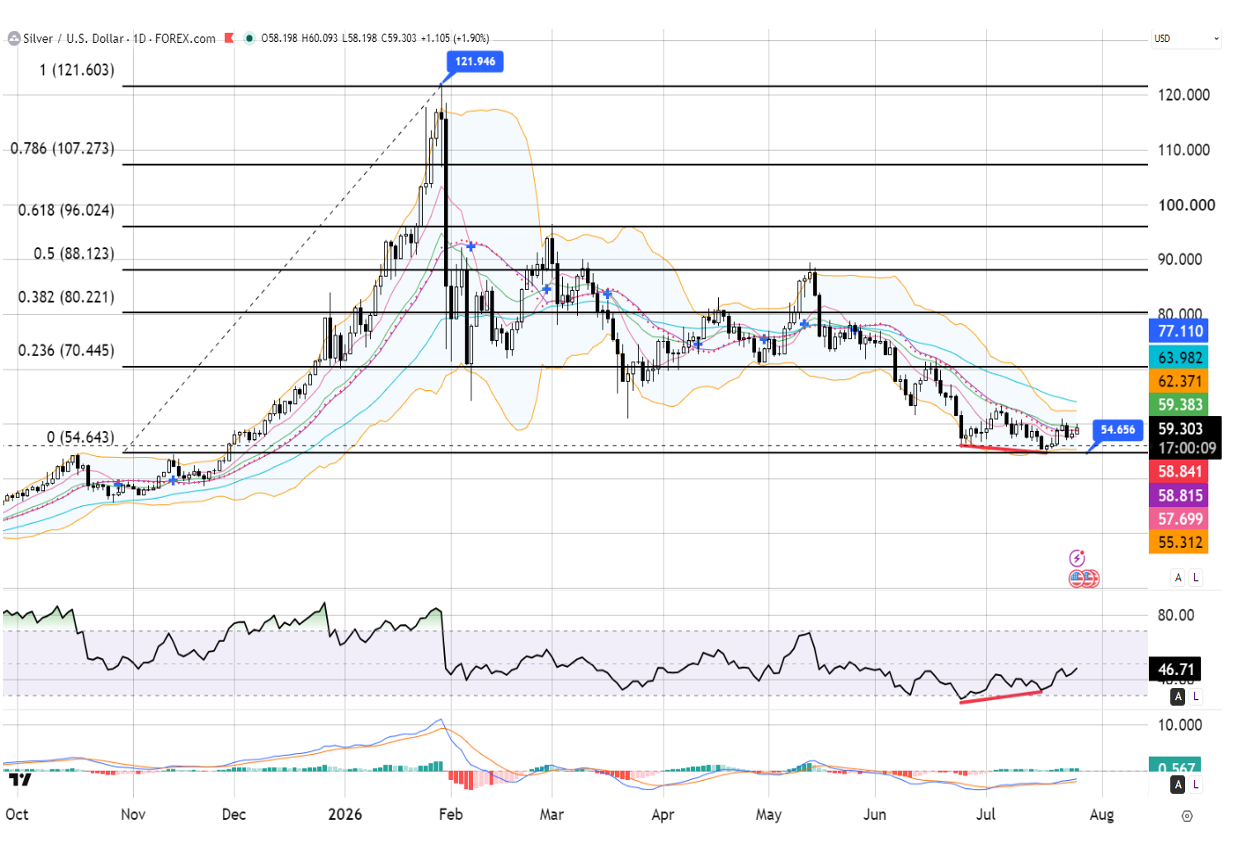
Technical View: $59.30. A decisive cross above $60.65/61.00 zone can see
prices to test $70.45 or even higher. Support $55/54. Critical support at
$49/51. Favored view is mildly bullish.
Crude Oil
Crude oil fell as much as 7% toward $83 per barrel on Monday before trimming some
losses, after the US suspended strikes against Iran for a second consecutive night,
easing concerns over supply disruptions in the Middle East following weeks of
heightened conflict. The pause began late Friday without any official announcement,
while Tehran said it had halted its retaliatory military operations in response and
engaged in talks with Oman regarding the Strait of Hormuz. Still, Iran-backed Houthi
forces in Yemen claimed responsibility for attacks on facilities associated with Saudi
Aramco at the Red Sea ports of Jizan and Yanbu over the weekend. Oil prices have
surged nearly 40% this month as supply disruptions expanded from the Strait of
Hormuz to the Red Sea, an increasingly important alternative route for Saudi Arabian
crude exports that transports millions of barrels each day.
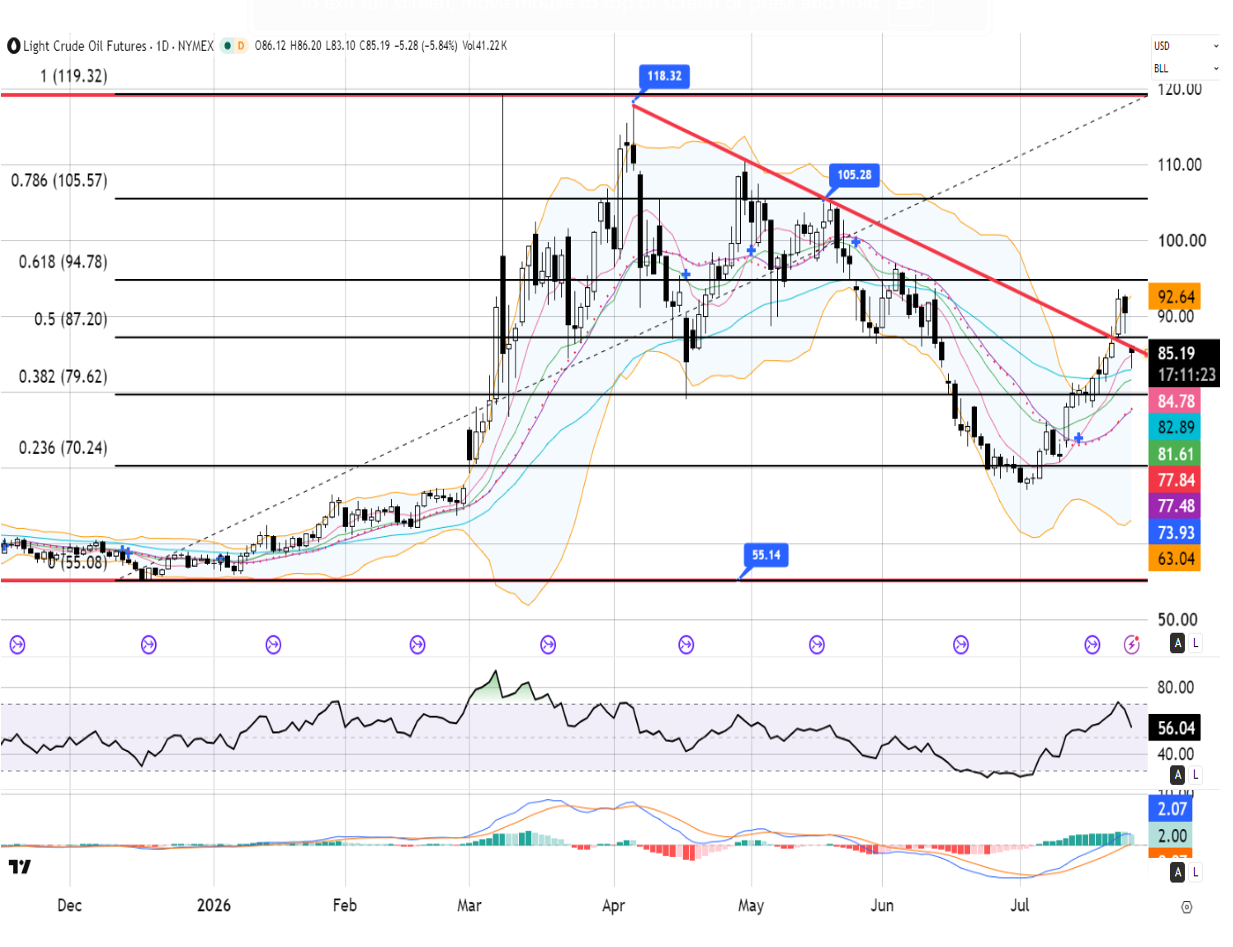
Technical View: $85.19. Corrective dips are favored to hold near
84.75/83.75 for a rally toward 95.30, 98.00, and 100.10. An unexpected dip
below 82.25 risks a decline toward 80.50/79.50, rendering the trend
neutral, whereas a break below 77.50 signals broader weakness.
Copper
Copper gains in the early Asian session. Signs of supply tightness in China could
support prices, say ANZ Research analysts in a note. Concerns about disruption to
copper supply are also mounting, as severe storms in Chile are threatening to disrupt
copper production, they add. The three-month copper contract on the London Metal
Exchange is up 0.4% at $13,645.00 a metric ton.
Technical View: $6.35. Charts indicate a mildly bullish objective targeting
6.49(upper Bollinger band) near term. A decisive cross above 6.40/42
resistance zone could likely confirm the up move. Supports at 6.30/27
where dips could hold for a rise. Deeper supports seen at 6.18. Favored view
is mildly bullish in the near term.