Mr. Gnansekhar
Teaser: Oil rises on rising concerns over supply disruptions in the Middle East. American military forces started conducting a new wave of strikes against Iran for ninth straight night, the U.S. Central Command said in a social media post on X. The conflict has also expanded beyond military targets, with bridges, utilities, and port facilities coming under attack. Kuwait Petroleum Corp. said an Iranian strike hit one of its oil facilities on Saturday. Oil prices have now surged nearly 30% from their July lows as the interim peace agreement between the US and Iran unraveled, the US resumed its blockade of Iranian ports, and Tehran intensified attacks on ships near the Strait of Hormuz.
Introduction:
Crude oil climbed toward $85 per barrel on Monday, extending last week's gains as escalating hostilities between the US and Iran raised fears of further disruptions to oil flows from the Middle East. Iran declared that its ceasefire with the US had effectively collapsed and said over the weekend that it intercepted four vessels transiting the Strait of Hormuz.
Meanwhile, the US military reported the death of a third US service member in the past two days amid ongoing exchanges of attacks with Tehran. WTI crude futures posted another week of gains as intensifying military exchanges between the United States and Iran heightened concerns over potential supply disruptions across the Middle East. Continued threats to shipping through the Strait of Hormuz, renewed attacks on regional energy infrastructure and persistent geopolitical uncertainty restored a significant risk premium despite expectations of higher OPEC+ production and softer global demand growth. Traders also monitored inventory trends and diplomatic developments for signs of further escalation or de-escalation. Going into the coming week, crude is expected to remain highly headline-driven, with developments surrounding Hormuz, US-Iran relations and regional security likely to dictate near-term price direction and market volatility. Global crude oil supplies are tightening due to reduced flows through the Strait of Hormuz. The International Maritime Organization warned on Wednesday that it's too dangerous to cross the Strait of Hormuz at the moment, and visible transit through the strait has fallen sharply in recent days.
According to Bloomberg calculations based on vessel-tracking data and information from Kpler and Vortexa, the seven-day moving average of oil flows through the Strait of Hormuz, including Iranian supplies, has slumped to about 5.5 million bpd through Wednesday from 9.4 million bpd before the collapse of the US-Iran ceasefire.
Gold
Gold fell back below $4,000 an ounce on Monday, drifting toward nine-month lows as escalating attacks between the US and Iran drove oil prices higher, stoking concerns over inflation and the prospect of interest rate hikes. The US military said it carried out fresh airstrikes against Iran on Sunday following the deaths of three American service members, while Tehran declared that its ceasefire with the US had effectively collapsed and said it intercepted four vessels transiting the Strait of Hormuz over the weekend. Oil prices have now surged about 30% from their July lows, raising the risk that central banks may tighten monetary policy to contain inflation. Meanwhile, Cleveland Fed President Beth Hammack on Friday joined a growing number of Fed officials warning about persistent inflation. Markets are now pricing in about a 53% chance of a Fed rate hike in September, up from 47% a day earlier.
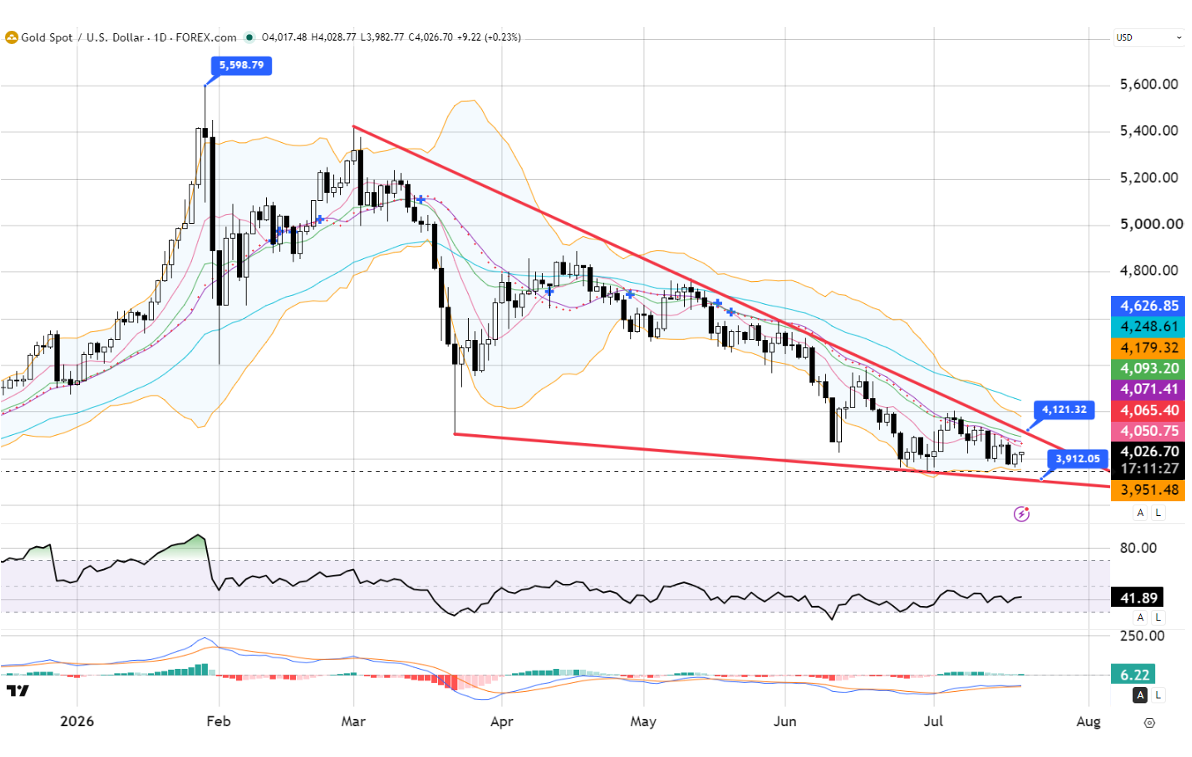
Technical View: $4024.75. Price structure favors a structural downward pull towards the 3800/3750 objective area, though indicators suggest initial corrective tests of nearby resistances at 4105/4185 could precede the decline. However, an unexpected crossover above the 4270 risk level negates our bearish expectations, signaling a failure of the bearish view.
Silver
Silver held below $56 an ounce on Monday, hovering at eight-month lows as escalating attacks between the US and Iran drove oil prices higher, stoking concerns over inflation and the prospect of interest rate hikes. The US military said it carried out fresh airstrikes against Iran on Sunday following the deaths of three American service members, while Tehran declared that its ceasefire with the US had effectively collapsed and said it intercepted four vessels transiting the Strait of Hormuz over the weekend. Oil prices have now surged about 30% from their July lows, raising the risk that central banks may tighten monetary policy to contain inflation. Meanwhile, Cleveland Fed President Beth Hammack on Friday joined a growing number of Fed officials warning about persistent inflation. Markets are now pricing in about a 53% chance of a Fed rate hike in September, up from 47% a day earlier.
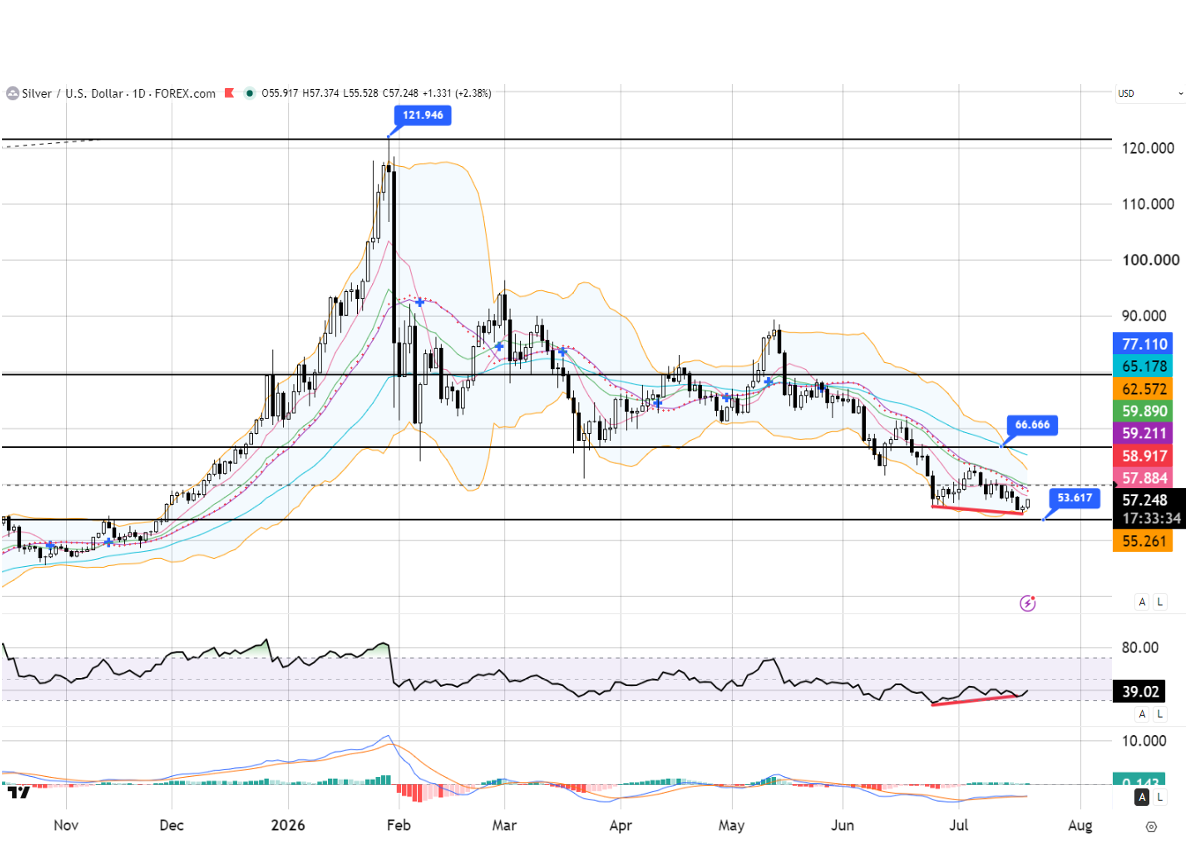
Technical View: $57.25. A bullish divergence in the charts could see the price face some upside in the near term. While above $54/55 support zone, expect price to edge higher and rise to $60/61. Unexpected fall below $54 could take it to $49/51 where deeper supports could likely hold the price.
Crude Oil
Crude oil climbed toward $85 per barrel on Monday, extending last week's gains as escalating hostilities between the US and Iran raised fears of further disruptions to oil flows from the Middle East. Iran declared that its ceasefire with the US had effectively collapsed and said over the weekend that it intercepted four vessels transiting the Strait of Hormuz. Meanwhile, the US military reported the death of a third US service member in the past two days amid ongoing exchanges of attacks with Tehran. The conflict has also expanded beyond military targets, with bridges, utilities, and port facilities coming under attack. Kuwait Petroleum Corp. said an Iranian strike hit one of its oil facilities on Saturday. Oil prices have now surged nearly 30% from their July lows as the interim peace agreement between the US and Iran unravelled, the US resumed its blockade of Iranian ports, and Tehran intensified attacks on ships near the Strait of Hormuz.
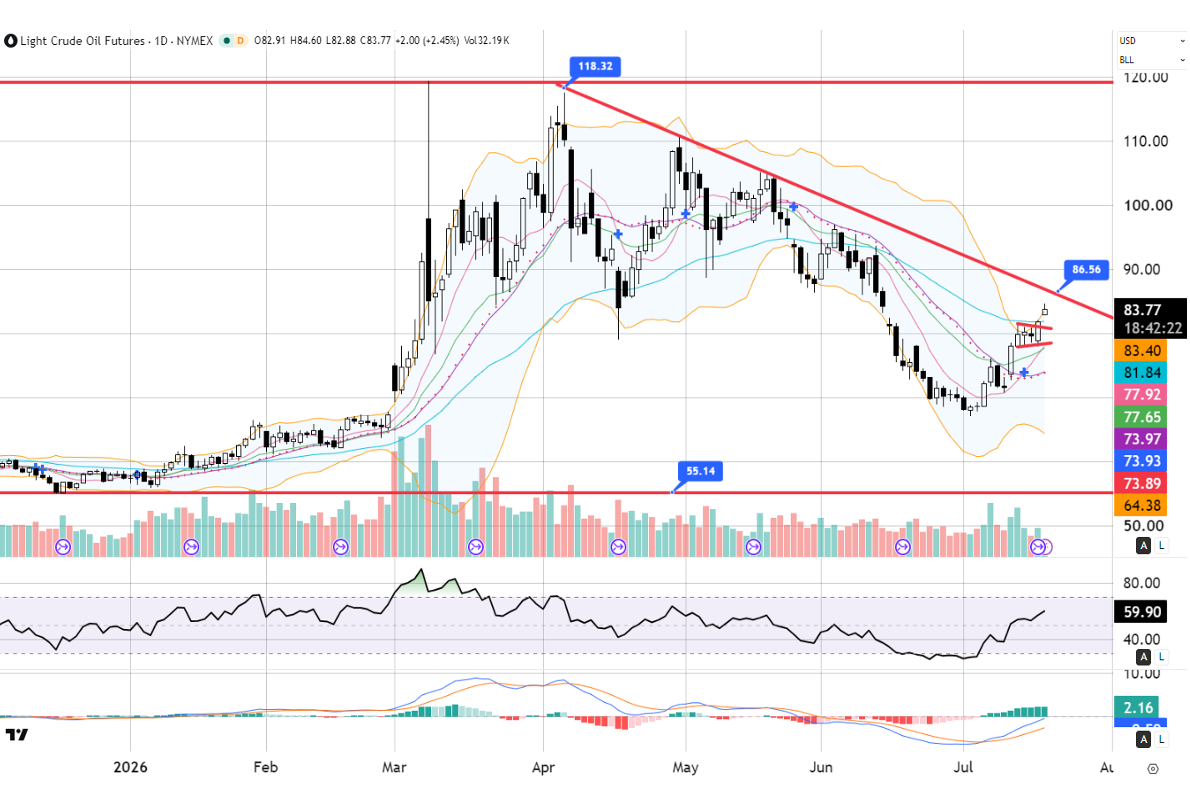
Technical View: $83.77. Price seems to be eyeing a break above weekly resistance at $84.45 to challenge the subsequent 87.50/87.75 objective area. Crucial daily supports near 79.60/77.15 are expected to anchor immediate pullbacks. However, an unexpected breach below the 75.80 risk level invalidates this structure, signaling immediate weakening and a deeper decline towards 73.25.
Copper
Copper steadied around $6.25 per pound on Monday after experiencing sharp volatility last week, as persistent supply concerns continued to offset demand-side uncertainties. A powerful storm in top producer Chile disrupted operations at several copper mines and ports across central Chile, prompting major miners including Codelco, Antofagasta, and Anglo American to activate safety protocols. Meanwhile, Antofagasta reported that first-half copper production fell 9.5% to 285,000 tons due to weaker output at two key mines. BHP also warned that its Chilean copper production is expected to decline next year, while the IEA flagged tightening sulphuric acid supplies as a result of the escalating Middle East conflict. In the latest developments, the US military carried out fresh airstrikes against Iran after three American service members were killed, while Tehran said it intercepted four vessels transiting the Strait of Hormuz.
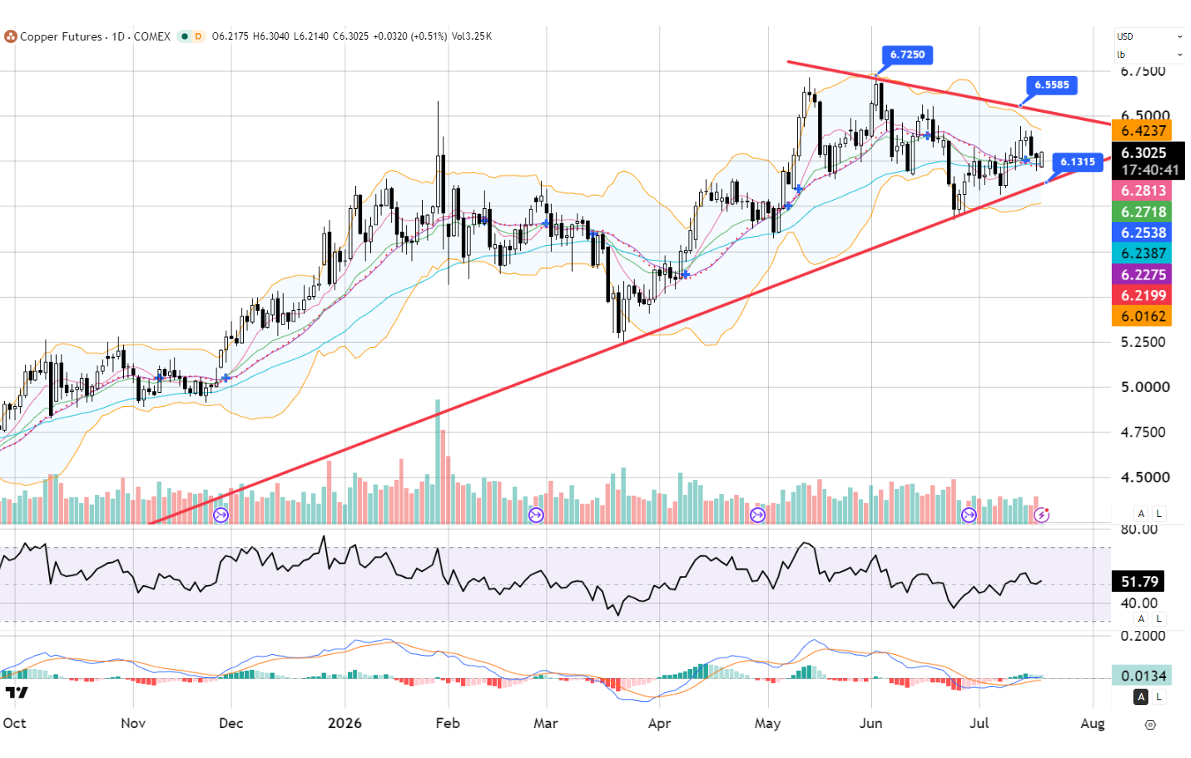
Technical View: $6.30. Charts indicate a mildly bullish objective targeting 6.42(upper Bollinger band) near term. A decisive cross above 6.40/42 resistance zone could likely confirm the up move. Supports at 6.10/15 where dips could hold for a rise. Only an unexpected fall below 6.06 critical trendline support could dash our bullish hopes.